Why Israel wants more heavy bombs from the US and why the sale is controversial

Munitions experts say that bombs of that size are almost never dropped by US forces in densely populated areas, and US military officers have said such bombs are unsuitable for urban combat.
JERUSALEM – The Trump administration’s decision to send 60,000 powerful one-ton bombs to Israel as part of a US$2.8 billion (S$3.58 billion) deal – one of the largest arms agreements ever – will allow Israel to replenish its supply of a munition it considers vital.
The weapons became the focus of great tension between the Biden administration and Israel after one-ton bombs were widely used in densely populated areas of the Gaza Strip where Israel had steered civilians for their safety.
With opposition to military assistance to Israel growing in Washington, such a huge sale of heavy bombs, paid for by the US government, could be an effort by the administration to stock up the Israeli arsenal before political shifts in the United States make such shipments impossible, analysts said.
The Israeli military pivoted towards the use of the one-ton bombs after the Hamas-led attack against southern Israel on Oct 7, 2023, drastically changing its shopping list, US government data show. In 2025, Israel bought nearly eight times as many one-ton bombs from the United States as it did from 2012 to 2015.
Israel’s emphasis on buying and using some of the largest bombs currently made runs counter to that of most other modern militaries, which have been making their aerial munitions smaller and even more accurate in the hopes of limiting civilian casualties during combat.
Israel has used a vast amount of the one-ton bombs in large part to target the tunnel network Hamas developed in Gaza for its fighters, weapons and command centres. Israeli officials have said that Hamas fighters intentionally embed themselves among civilians, forcing the Israeli military to risk killing civilians.
A New York Times investigation in December 2023 found that the Israeli military routinely used one-ton bombs in the weeks immediately after the 2023 attack and identified more than 200 instances of Israel dropping the powerful munitions, including in densely populated areas.
Here is a closer look at the transaction and its significance.
According to a US official, Israel will receive 20,000 Mk-84 bombs and another 20,000 BLU-117 bombs. The two types of one-ton bombs are nearly identical.
The bombs are highly versatile, experts say. They can be set to detonate above ground, sending shrapnel 300m in any direction, or, with delayed fuses, set to explode underground. They can be fitted with kits that allow them to hit targets with precision and from a long range. The craters from one-ton bombs can be up to 15m deep.
In addition to the 40,000 Mk-84 and BLU-117 bombs, Israel will also receive 20,000 I-2000 Penetrator warheads, which explode on delay after busting through a surface like soil, rock or concrete, the US official said. They also weigh a ton each, but because their casings are thicker and far heavier, they carry far less explosive power than the Mk-84 and BLU-117 bombs.
According to the US Army office that oversees bomb procurement, “ideal targets” for one-ton bombs “are buildings, rail yards and lines of communication”. The 110kg and 220kg bombs more typically used by the US military are designed for “soft, fragment sensitive targets” such as troops, fuel storage tanks and radars, the office said.
The US$2.8 billion purchase is being funded from the Pentagon’s budget for foreign military sales. That means the money effectively flows from US taxpayers to Israel’s military and then to US munitions manufacturers.
Representative Gregory Meeks of New York, the top Democrat on the House Foreign Affairs Committee, said on Sept 16 that he had placed a hold on the proposed sale, citing concerns about the bombs’ potential use in densely populated areas in Gaza and Lebanon. Such holds are part of an informal congressional review process and are not necessarily binding.
To stop a weapons transfer at this stage, a resolution of disapproval would have to pass both the House and Senate and then overcome a certain veto by the president. That would require a two-thirds majority vote in both chambers, which has never happened.
Both the Biden and Trump administrations have bypassed congressional review of weapons sales to Israel by invoking emergency authority. The Biden administration used it twice in December 2023, while the Trump administration invoked it in 2025 to expedite additional arms sales to Israel.
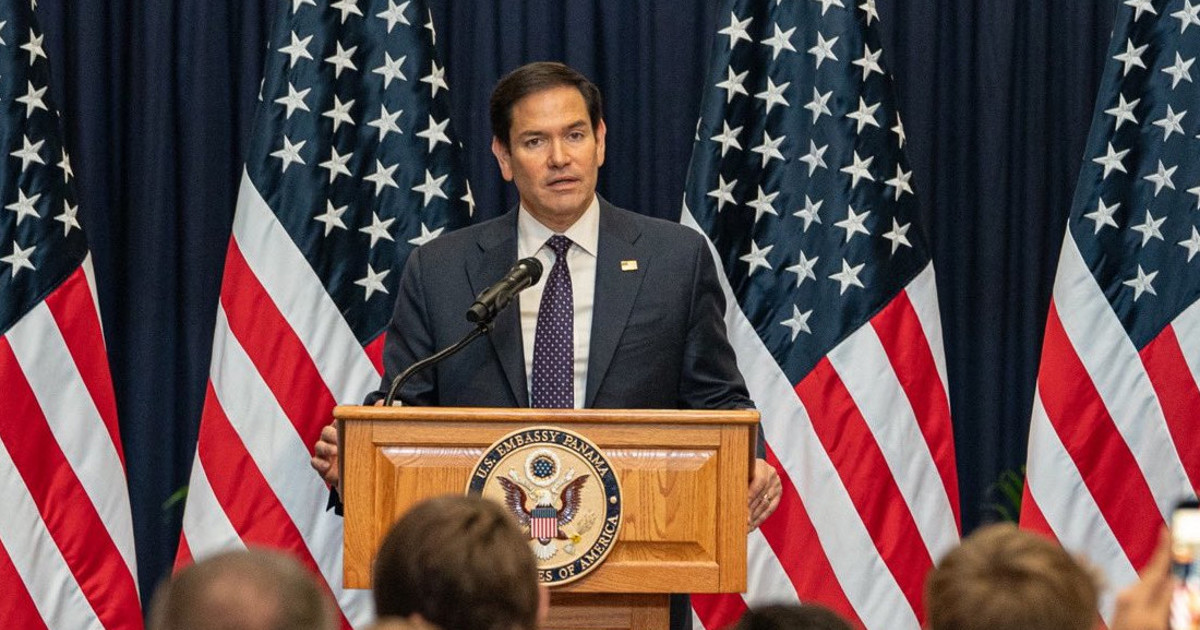
In addition, Secretary of State Marco Rubio has repeatedly exercised emergency powers to proceed with such transactions. In March, he bypassed Congress to send US$4 billion (S$5.1 billion) in weaponry to Israel, including more than 35,000 of the same kinds of one-ton bombs.
Some congressional Democrats have called for ending US military aid, or even all aid, to Israel in response to the huge civilian toll of Israel’s war in Gaza.
Anger toward Israel is also growing on the right.
Former Fox News host Tucker Carlson, an outspoken critic of Israel, wrote in a social media post on Sept 15 that there was no justification for supplying Israel with so many of the bombs it had used in killing Palestinians in Gaza. He said it would only embolden Israel elsewhere.
“The 40,000 new bombs the Trump administration is sending will be used to do the same in Lebanon, and likely in other countries in the region,” he wrote. “If you wanted to extend the Iran war into the indefinite future, this is exactly what you’d do.”
Experts describe one-ton bombs as a workhorse of the Israeli air force, which has operated in seven theatres of conflict over the past few years: Gaza, the occupied West Bank, Lebanon, Iran, Syria, Yemen and Iraq.
Those campaigns have severely depleted the air force’s munitions. One former air force commander, speaking on condition of anonymity to discuss sensitive information, said that Israel had learnt it was necessary to amass a multiyear supply, in case of delays in replenishing stocks, and that 40,000 one-ton bombs were considered a full supply.
“The traditional concept of Israel’s defence doctrine was short wars,” said a retired major general, Amos Yadlin, a former deputy air force commander and former head of Israeli military intelligence. “What we saw in the last three years was Israel was dragged – and maybe even with some contributions of Israeli decisions – to a long war. And if you’re in a strategy of long wars, you need more ammunition.”
The New York Times reported in December 2023 that in the first six weeks of the war in Gaza, Israel routinely used one-ton bombs in parts of the enclave that it had designated as safe for civilians, including densely populated areas. The Times identified 208 craters of at least 12m across in an area of southern Gaza where Israel had ordered civilians to move to for their own safety.
Munitions experts say that bombs of that size are almost never dropped by US forces in densely populated areas, and US military officers have said such bombs are unsuitable for urban combat. Since the Vietnam War, US forces have used one-ton bombs sparingly.
Israel reaches for them far more often. It says that the heavy bombs are necessary to strike enemy forces hiding in large buildings or in underground tunnels, and that its military always seeks to avoid or minimise civilian casualties.
The one-ton bombs became a source of friction between former US president Joe Biden and Israeli Prime Minister Benjamin Netanyahu in May 2024, when Biden held up a shipment of 1,800 bombs in an effort to deter Israel from attacking the city of Rafah, where many displaced Palestinians were sheltering.
Israel attacked and destroyed much of Rafah anyway. The Trump White House released the shipment of bombs days after Donald Trump took office in 2025.
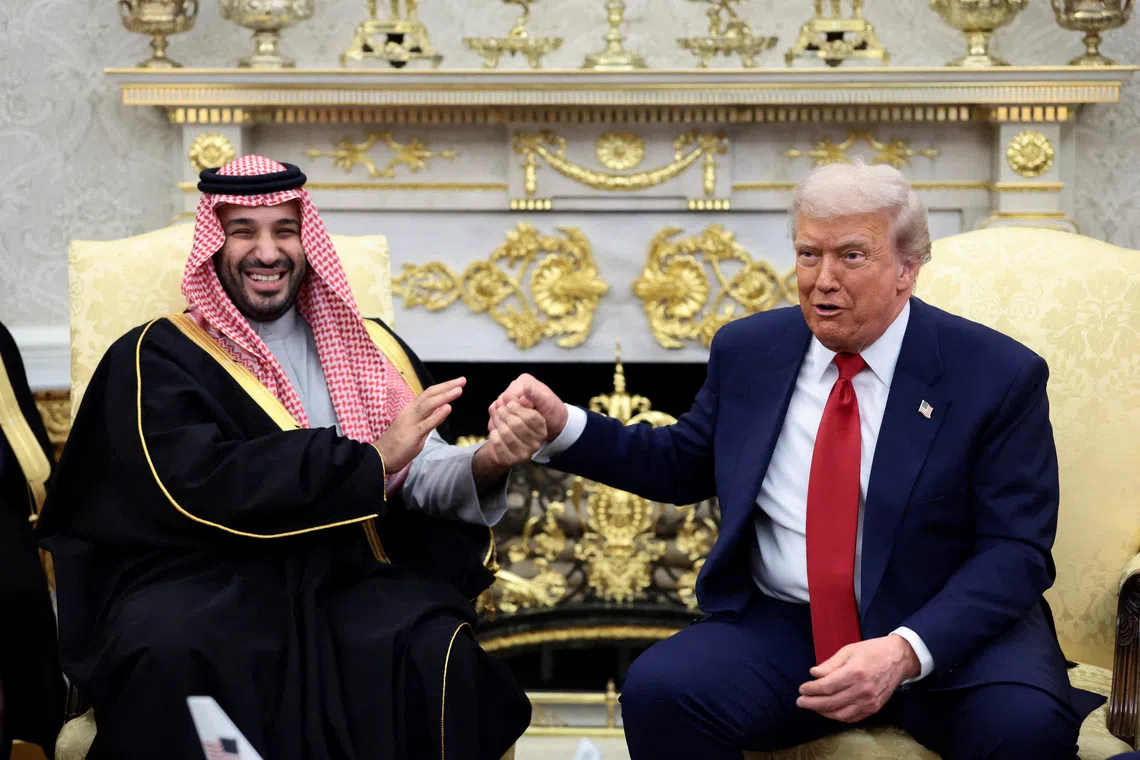
At a time when the relationship between Trump and Netanyahu has been on a roller-coaster ride, the political dimensions of proceeding with such a large deal for heavy bombs cannot be ignored.
Chuck Freilich, a former Israeli deputy national security adviser, said the deal should not be seen as an attempt to aid Netanyahu’s campaign for a new term in October’s election, in which he is behind in the polls. “If it was a new deal for F-35s, it would be worth a headline,” he said.
Still, Yadlin said, the arms deal sends an important signal to Israel’s enemies that the United States still has its back. “This is a way to show that, even if there are some differences, on the basic security of Israel, the US is still a very strong ally,” he said.
But Israel’s defenders are also mindful that the political winds have shifted and that it is not likely to become any easier to obtain such munitions from the United States in the foreseeable future, especially with the 2028 election nearing.
Jesse Weinberg, a researcher at the Institute for National Security Studies in Tel Aviv, said that officials in Israel and many of Israel’s supporters in Washington were looking to “front-load” military aid to Israel “because we don’t know what the construction of the next Congress is going to be – and then there’s the eye to 2028”.
“The view at the Kirya,” he said of Israel’s military headquarters, “in the prime minister’s office and also among Israel’s supporters on the Hill, is that if you want to move things, now is the time.” NYTIMES
This article originally appeared in The New York Times.