Why killing of LeT's Lateef Bhat is Kashmir's biggest security success of 2026
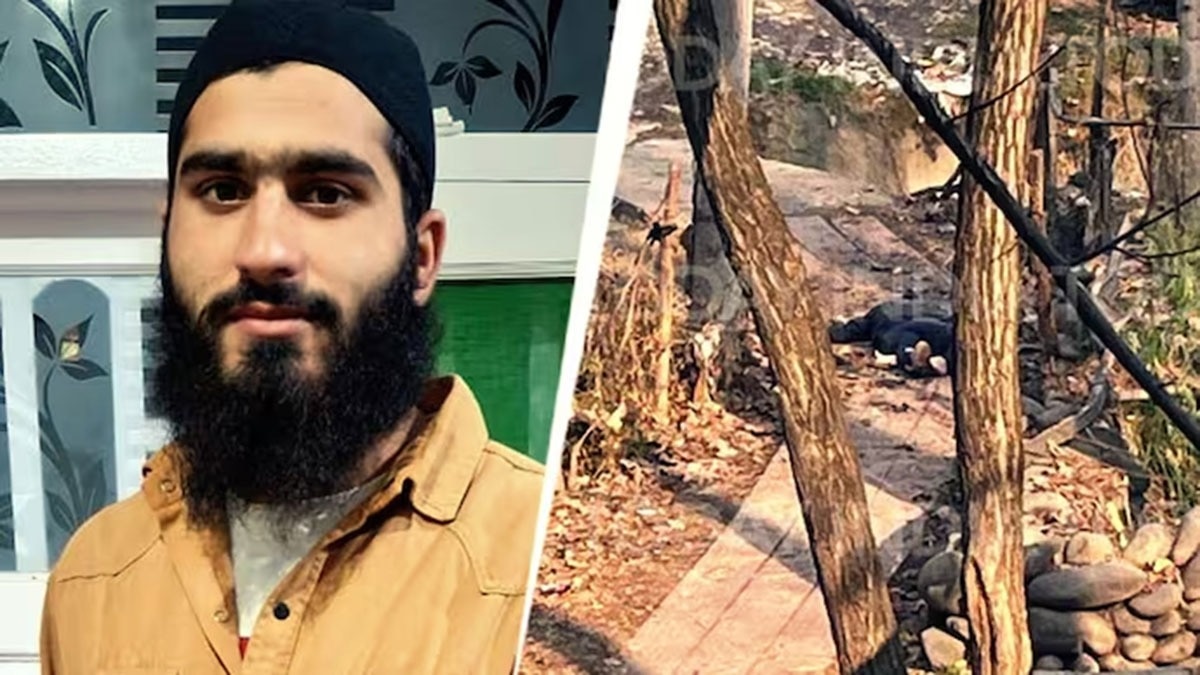
Security forces in Jammu and Kashmir have notched a major counterinsurgency success with the killing of Lashkar-e-Taiba (LeT) commander Lateef Ahmad Bhat, described just days ago as Kashmir Valley’s only active local militant.
Bhat, 22, was eliminated in an early-morning gunbattle on November 18 in Kulgam’s Zangalpora area—eight days after he and his alleged accomplice Umar Nissar Dar had targeted a security checkpost in Akhran village, leaving three Central Reserve Police Force (CRPF) personnel injured, one of them critically. A manhunt had followed that attack.
Termed as “ruthless”, Bhat had been on the radar of security forces over the past year, a period during which he was involved in a series of attacks and had escaped multiple security cordons. His death is being noted in security circles as one of the biggest counterinsurgency successes of 2026 in Kashmir.
“The body of one neutralised terrorist, along with a weapon, has been recovered from the encounter site. The terrorist neutralised during the joint operation is identified as Mohd Lateef Bhat R/O Khrewan, Kulgam,” the J&K police posted on X.
The joint security operation was launched by the Indian Army, J&K police and CRPF in Zangalpora, based on specific intelligence.
Bhat was killed outside the village mosque where he had taken shelter after security forces tightened cordon. His alleged accomplice Umar Dar was shot dead in an orchard in Larnoo on November 16. Bhat is suspected to have escaped that security dragnet.
“Congratulations guys. Some dishes are best served cold, even in cold weather,” CRPF director general G.P. Singh remarked in a cryptic message on X, after confirmation of Bhat’s death.
Bhat was named as the only active local militant in the Kashmir Valley in Kashmir zone inspector general of police Sujit Kumar’s assessment on November 5. He was described as supported by transient foreign militants who constantly shift locations.
Bhat, according to security forces, joined the militant ranks exactly a year ago, on November 18, 2025. He first caught security eyes when his movements, along with those of Zakir Ahmad Ganai, were captured on surveillance cameras in south Kashmir. Ganai, a top LeT militant, was killed by security forces in Saidpora area of south Kashmir on July 8 this year. Both had been caught on CCTV while moving through dense apple orchards in Chanapora.
As investigations into the November 11 attack on the CRPF post progressed, agencies suspected Bhat. His alleged role in earlier attacks had already intensified the focus on him. In July, two migrant labourers were killed in a terrorist attack in Kulgam’s Kelam, not far from Akhran. Bhat is also alleged to have been involved in the killing of a policeman, deployed on Amarnath Yatra security, in Anantnag on July 22. In August, the J&K police announced a reward of Rs 15 lakh for information leading to Bhat’s arrest. Posters carrying his pictures were put up around Kashmir.
The November 11 attack raised fears of attempts to revive insurgency, which has declined sharply since 2019. Surveillance footage emerging after that attack had shown Bhat moving with Dar.
Before joining militant ranks in 2025, Bhat had gone missing for months. He dropped out of college and was suspected to be self-radicalised and ideologically driven. That is possibly why he refused to surrender during the security operations that killed him.
According to security officials, Bhat refused to heed the advice to lay down arms, saying God was with him. “I have to meet God, I am very happy,” he replied on a video call from inside the mosque after security officials sent in a mobile phone.
“We made a lot of efforts and appealed to him to surrender. I personally, along with commanding officer of 9 RR (Rashtriya Rifles), spoke with him on video call. It was a long conversation through a phone that we provided inside,” Kulgam senior superintendent of police (SSP) Anayat Ali told the media before Bhat was eventually killed.
“We tried hard to persuade him to surrender. We told him he is young and has a life ahead. He did not accept and later entered a mosque. Later, we again made announcements for him to surrender. Finally, he opened fire around 2:45 am on the security forces and a gunfight erupted,” Ali said. “We strictly followed standard operating procedures and exercised maximum restraint to ensure minimal damage to the mosque.”
The Kulgam SSP, who supervised the operation on the spot, described the elimination of Bhat as the biggest counterinsurgency achievement of 2026, noting that it was exactly a year ago on this day that Bhat had become active after joining the LeT. He said Bhat was a “highly self-radicalised” militant who “received guidelines from across the border” to “shatter peace” in Kashmir and “hit the local economy and tourism”.
Bhat was killed after he came running out of the mosque. “During the operation, the terrorist took refuge in a mosque. Security forces displayed exemplary restraint during the conduct of operations, ensuring the sanctity of the religious place, and neutralised the terrorist with precision by forcing him to move out of the mosque premises,” the Kashmir-based Chinar Corps of the Indian Army said on X.