Why laying off 500 workers at Hamilton's Stelco is an unpleasantly familiar warning for Mark Carney - Toronto Star
It's time to start being firmer, more forward-looking and more transparent before green-lighting major takeovers, Adam Radwanski writes.
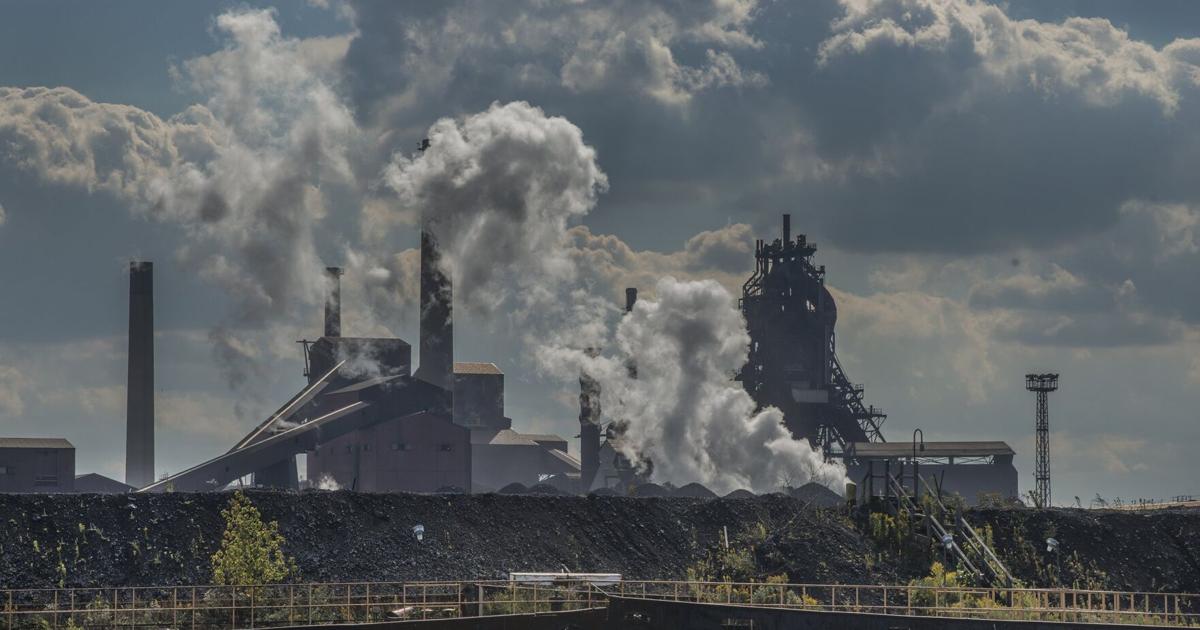
Cleveland Cliffs laying off 500 workers at Stelco in Hamilton, writes Adam Radwanski, is an unpleasantly familiar warning for Mark Carney’s investment push.
Adam Radwanski is a business columnist for the Star, focused on the intersection of the economy, politics and public policy. Reach him via email: aradwanski@thestar.ca
Just as Mark Carney triumphantly pitches global investors on Canada being open for business, along comes an unpleasantly familiar reminder of how that can lead to domestic closures.
Even by the standards of foreign executives making promises they don’t intend to keep, the decision by the U.S.-based Cleveland Cliffs to curtail operations and lay off 500 workers at Stelco’s facilities in Hamilton and Lake Erie — just two years after buying the Canadian steelmaker with commitments to keep it whole — is pretty brazen. That includes its CEO Lourenco Goncalves, a prominent Trump supporter, greeting outrage in Canada with an indifferent see-you-in-court response.
But we’ve seen this movie before. Stelco itself already went through this when U.S. Steel bought it in 2007 with pledges to maintain employment and operational levels, before dramatically shrinking both. And you don’t have to look too far for other examples from the past couple of decades, from the shrunken old Inco mines in Sudbury, to the long-standing locomotive factory in London that was shuttered after Caterpillar Inc. acquired it.
Meanwhile, a similar phenomenon is currently playing out in Brampton, where it’s become glaringly obvious that Stellantis has little intention of resuming its automaking efforts. In this variation, an existing foreign owner accepts government subsidies in return for bolstering its presence, then reneges when its priorities shift.
None of which is going to stop the prime minister, hot off last month’s buzzy foreign investment summit in Toronto, from aggressively trying to draw more global capital into the country. Nor should it, entirely.
The bulk of what he was pitching, at that event, was greenfield investment — equity and other types of financing to build new things. If that helps get us more mines or power stations or ports, so much the better. The same goes for foreign venture or growth capital for emerging Canadian tech companies, which have notoriously struggled to raise enough money domestically.
But if Canada is going to come anywhere close to Carney’s rather arbitrary target of attracting $1-trillion in global capital over five years, mergers and acquisitions — which largely accounted for a foreign-investment surge last year — are going to do a lot of the heavy lifting. And that’s what makes the warning inadvertently offered by Cleveland Cliffs (and to some extent Stellantis) so timely.
We should know by now that the danger of new foreign owners cutting Canadian assets tends to be highest when economic times are most turbulent. A disproportionate number of those previous about-faces happened during the Great Recession and its aftermath. Even when economic nationalism isn’t one of the big factors in the turmoil, there’s an inclination to prioritize holdings in the countries where they’re based.
That risk is all the more acute now, when the turbulence is being caused mostly by an American president who’s using tariffs to try to get more manufacturing stateside, and who has executives (from the U.S. and elsewhere) scurrying to avoid his wrath by demonstrating that their U.S. commitments come first.
We can’t close ourselves off to such threats, by blocking most of the sales that are a normal part of doing business in an economy that was pretty open even before Carney came along.
But rather than, say, using an airport privatization plan to signal to foreign investors that even heretofore untouchable assets are up for grabs, this would be a good moment to start being firmer, more forward-looking and more transparent before green-lighting major takeovers or financially backing multinationals’ operations here.
That could start with greater clarity around how Ottawa uses the Investment Canada Act, which is the authority under which it can review foreign purchases on both security and national-interest grounds. There’s a perception, particularly when the buyers are from (heretofore) friendly countries like the U.S., that it tends to be a rubber stamp. And there seems to be confidence among those companies, as displayed by Cleveland Cliffs this week, that any negotiated conditions can later be tackled by their lawyers if need be.
It’s hard to really know, because those conditions are rarely made public. The same tends to go for the subsidy deals, with both sides invoking commercial sensitivity to keep details vague. So for Canadians to know what the government is getting us into, that needs to change — perhaps, in the case of the Investment Canada Act, through amendments to scale back its confidentiality provisions.
It also might necessitate updates to what sorts of commitments Canada demands, beyond steady employment or production. The Stelco facilities don’t seem to be the most state-of-the-art in Cleveland Cliffs’ portfolio, and neither is the Brampton plant for Stellantis. Maybe if those facilities’ owners had enforceably committed to more upgrades, it would be harder to then prioritize their operations elsewhere.
But more than nitty-gritty negotiating processes, it’s also a matter of the broader signals being sent.
There’s a fundamental contradiction between the tone Carney has struck at the summit and while globe-trotting, and the anger he showed this week after the Stelco news.
It’s up to him to reconcile that, by drawing a clearer distinction — for Canadians, and for global audiences he’s courting — between the sorts of foreign investments that help us grow and the ones that can gut us.
Opinion articles are based on the author’s interpretations and judgments of facts, data and events. More details
Adam Radwanski is a business columnist for the Star, focused on the intersection of the economy, politics and public policy. Reach him via email: aradwanski@thestar.ca