Why Manoj Bajpayee, Divya Dutta are an awesome twosome in 'Last Man in Tower'
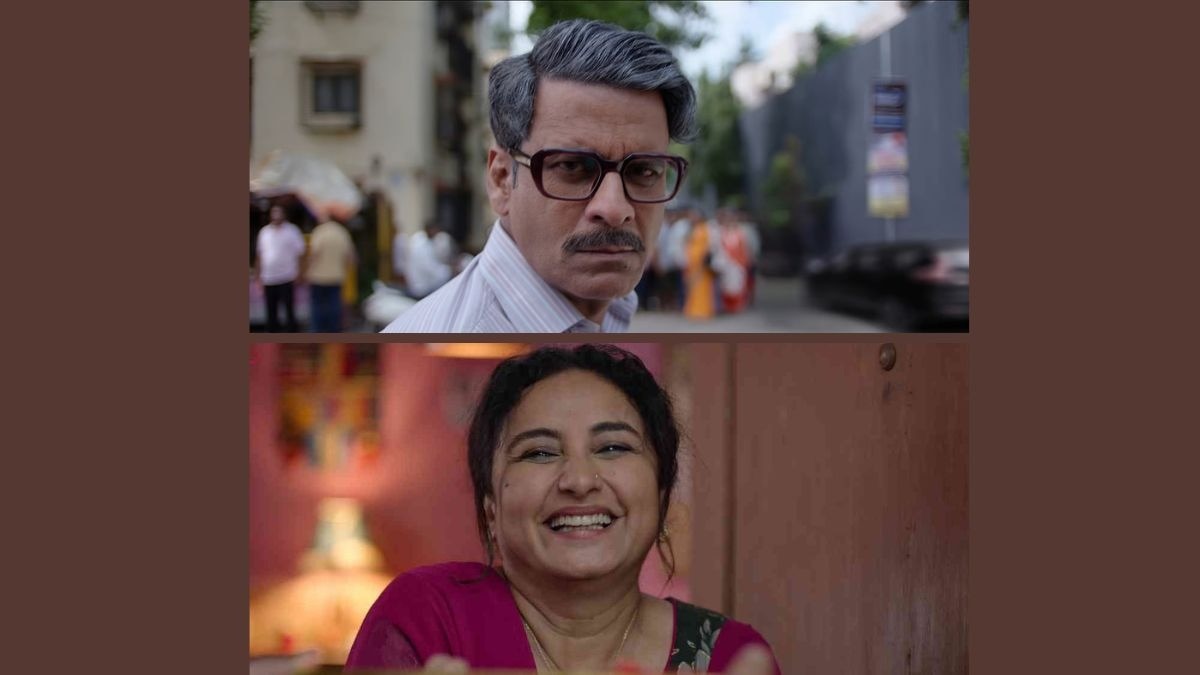
Google Manoj Bajpayee-Divya Dutta films and you will get a bunch of titles, including Veer-Zaara and Special 26. But the actors tell you they didn’t have one proper scene with dialogues exchanged in either. “Just a passing shot,” says Dutta. Yet she and Bajpayee have known each other for years, meeting at parties and award shows. “When someone asks which actor you’d like to work with, his name comes first in the wish-list,” says Dutta. “That’s my greed. I finally saw the magic that unfolds in front of you.”
Dutta and Bajpayee feature in Last Man in Tower, which hit cinemas on September 11. An adaptation of Arvind Adiga’s novel by the same title, the actors knew they had a script whose backdrop of a housing society’s residents at odds with redevelopment is a situation most Mumbaikars would relate to.
“When you have to pack bags and move, you feel bad,” says Bajpayee. “You are attached to each wall, nook and corner. In the film, you connect with my character Masterji’s emotional idea about not letting go of the house. For him, it is his memory of his wife and the time spent with her and their children. He is a man of principles, but they are coming in way of people’s dreams and change, which is very much needed.”
The greyness of the film’s characters is also what drew Dutta to the project. She plays a mother with a differently abled child to care for. “When you are stuck with a routine, you forget about yourself, that you have desires, needs that could bring a smile. Sangeeta is someone who has forgotten to look in the mirror,” she says.
The conflict between Masterji and Sangeeta is one of the core arcs of the film. “There’s a bond she shares with him. She feels he understands her, but then the dynamics change somewhere. They are both right in their own ways,” says Dutta.
The film, she feels, will kickstart a conversation on “what are the stakes we are ready to compromise on to get what we want”.
The drama will strike a chord especially as space-crunched Mumbai has been mushrooming vertically and opting for gated communities instead of housing societies where everyone would know one another. “Now, you are so busy with your own life that you don’t know what’s happening in someone’s else,” says Dutta. “The silence and loneliness that have trickled in, you don’t have support systems anymore.”
Bajpayee adds: “I have experienced the warmth at the beginning of my stay in this city. But as the towers have grown, the distances have too. People are now more interested in FSI (floor space index) and amenities.”
For Bajpayee and Dutta, mutual appreciation of each other’s craft and respect for each other’s journey made the experience of finally getting ample screen-time together all the more special. “He is a very generous actor,” says Dutta of Bajpayee. “He will say, ‘It’s your field, go play’. It is so amazing to have someone up your performance.”
Returning the compliment, Bajpayee feels Dutta’s thespian talents are finally getting the recognition they deserve. “She is a fabulous and passionate actor. I feel she is on the cusp of that big role,” he says. “I am waiting for that day.”
Thankfully for cinephiles, there will be more of the two actors on the screen soon.The duo will feature next in a film by one of their favourite collaborators, Neeraj Pandey. “Working with him is like being with family,” says Bajpayee.
Dutta adds: “He’s a reassuring presence in the lives he touched. I never ask him what I am doing in his film.”
All Bajpayee will tell us is that it’s a “crazy film” and one where he plays a Dilliwala. For now, though, both actors await audiences’ verdict on being Mumbaikars navigating a changing city.