Why preserving our heritage is a responsibility to future generations - IOL
THERE are some memories that never leave you. For me, one of those memories is waking up early in my grandparents’ home to the fragrance of incense, the gentle ringing of a prayer bell and the sound of prayers being recited in Tamil.
I would watch my grandparents offer prayers to Suriyan, the Sun God, followed by prayers to Lord Ganesha and Lord Shiva. As a child, I did not fully understand the significance of what I was witnessing. I simply knew that these rituals were part of our mornings and part of our family.
Years later, I realised they were much more than rituals. They were threads connecting me to generations before me. I remember asking my Thaatha, my grandfather, a question that seemed so simple at the time: Why do you pray in Tamil? He smiled and answered, “Because I feel it is the most loving way to communicate with my Lord.”
That answer has stayed with me throughout my life. My grandfather taught me, without perhaps even realising it, that Tamil was not simply a language. It was emotion. It was faith. It was identity. It was a connection to his ancestors and to the land from which our family came. And somewhere between those early morning prayers and his simple explanation, I began to understand that heritage is not something we merely inherit. It is something we carry.
As Indian South Africans, our story is deeply woven into the history of this country. Our ancestors arrived from India under vastly different circumstances, and many endured hardship as indentured labourers. Yet they brought with them something incredibly powerful: their traditions, languages, faith, music, food, customs and family values. They built families. They built communities. They built lives. And they gave us a legacy.
For me, attending Sunday service with my grandparents was therefore never only about connecting with God. It was also about honouring those who came before us - including my great-grandparents, whose journey to South Africa ultimately became part of the story of my family. That is why I believe Heritage Month should be about far more than dressing in traditional clothing for a day or enjoying food associated with our cultures.
Heritage should make us stop and ask: Who were the people who came before me? What did they sacrifice? What values did they carry? And what am I doing to ensure that their story does not end with me?
This question is particularly important for our young people. We are raising a generation surrounded by technology, social media and an endless stream of information. The world is changing at an extraordinary pace. There is nothing wrong with embracing modernity - but in our pursuit of everything new, we must be careful not to discard everything old. Because sometimes, the wisdom we are desperately searching for is already sitting within our own traditions.
Our cultures have preserved practices for generations that encourage stillness, reflection, discipline, prayer and connection. Practices such as meditation and yoga are increasingly recognised in modern society for their potential to support wellbeing, yet these practices have existed within Indian traditions for centuries. Perhaps the lesson is not that we need to choose between tradition and modern life. Perhaps we need to learn how to bring the wisdom of our traditions with us as we move forward.
I know this personally. As an artist and media personality, I have experienced the vulnerability that comes with being in the public eye. Criticism is inevitable, but in the age of social media, criticism can sometimes become cruel. Cyberbullying and harsh public judgement can affect even the strongest person. During those difficult moments, prayer and meditation have given me something that the outside world cannot always provide: a place to become still.
They have reminded me of who I am beyond the opinions of others. And perhaps that is one of the greatest gifts our heritage can give us - a sense of belonging in a world that can sometimes make us question ourselves. This is also why the character of "Aunty Sheila" is so meaningful to me. Aunty Sheila is a proud South Indian South African. Through her, I celebrate the beauty of our heritage, our Tamil language and the traditions that have shaped generations of Indian South Africans.
She proudly wears her sari, her pottu and her nose ring. She does not hide her culture; she wears it with pride. But beneath the clothing is a much deeper message. Aunty Sheila represents a generation that understands that culture is not something to be embarrassed about or quietly put away because the world is changing. Culture is something we can proudly carry into the future.
She represents the grandmother, the mother, the auntie and the daughter who keeps traditions alive around the dinner table, in the temple, at family gatherings and through the stories passed from one generation to another. She represents the people who came before us. And she represents the responsibility we have to those who will come after us.
Our children should know the meaning behind the Tamil words their grandparents speak. They should hear the stories of the people who came to South Africa before them. They should understand why certain traditions matter. They should know that the sari, the pottu, the prayers, the music, the food and the language are not simply cultural symbols - they are pieces of a much bigger story.
A story of survival. A story of sacrifice. A story of resilience. A story of identity.
As we celebrate Heritage Month, I hope we move beyond simply celebrating what makes us different. I hope we also celebrate what our ancestors endured to give us the freedom to be exactly who we are today. Let us sit with our grandparents and ask them questions. Ask them where their parents came from. Ask them what language they spoke. Ask them what traditions they followed. Ask them what life was like when they were young. Because one day, those voices will no longer be here to answer us. And when that happens, the responsibility of remembering will belong to us.
Heritage is not a museum piece. It is a living legacy. It lives in the language we speak, the prayers we say, the food we prepare, the values we teach our children and the stories we choose to tell. My hope this Heritage Month is that we do not simply look backwards with nostalgia. Instead, let us look backwards with gratitude - and then look forward with responsibility.
To my fellow Indian South Africans: let us honour those who crossed oceans, endured hardship and built a life for generations they would never meet. Let us honour them by knowing our history. Let us honour them by preserving our languages. Let us honour them by teaching our children our traditions. And above all, let us honour them by never being ashamed of where we come from. Because our heritage is not a burden from the past. It is the foundation upon which we stand as we build the future. Mikka nandri.
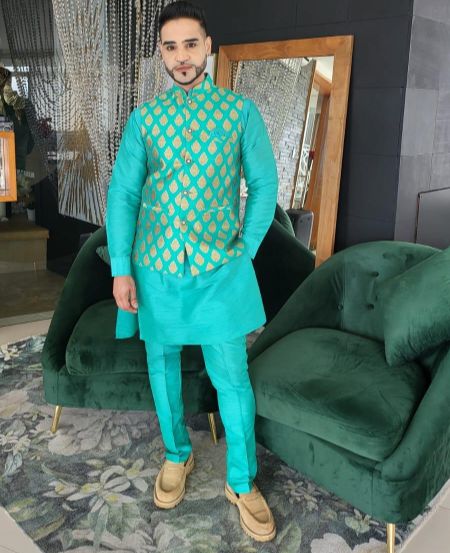
Theshen Naicker is an actor, producer, and performing artist who gained the love of his audience via Aunty Sheila.