
Why some MAGA supporters are sticking with Trump — and others are not - The Independent
Want to bookmark your favourite articles and stories to read or reference later? Start your Independent Membership today.
President Donald Trump’s approval ratings are cratering. Even his Make America Great Again, or MAGA, diehards have reservations.
This fact was evident to me when I attended MAGA rallies in three states on Oct. 24-25, 2026. One was a Turning Point USA get-out-the-vote event outside Harrisburg, Pennsylvania.
Along with a few dozen America First stalwarts wearing white “America the Beautiful” caps, I sat on a wooden table under a small picnic pavilion listening to speakers such as MAGA activist Scott Presler and Trump-endorsed U.S. Rep. Dan Meuser. Meuser reeled off MAGA talking points, including the supposed threat posed by transgender athletes and bathroom use, immigrant voter fraud and the “billionaire anarchist George Soros.”
Remarkably, the speakers barely mentioned Trump. The audience clapped politely, but the energy was tepid compared to the many MAGA rallies I attended in 2024, when the Pennsylvania landscape was dotted with Trump and MAGA signs. This time I saw none.
The numbers bear out what I observed.
A mid-October 2026 poll found that only a third of U.S. adults approve of the job Trump is doing; 71% feel the country is on the wrong track. The majority of Americans are pessimistic. A growing number worry about government corruption.
There’s the war with Iran that has resulted in U.S. soldiers being killed and wounded. The conflict is costing billions of dollars and spiked the price of gas. But most of all, Trump has lost support on the economy amid growing inflation and an affordability crisis.
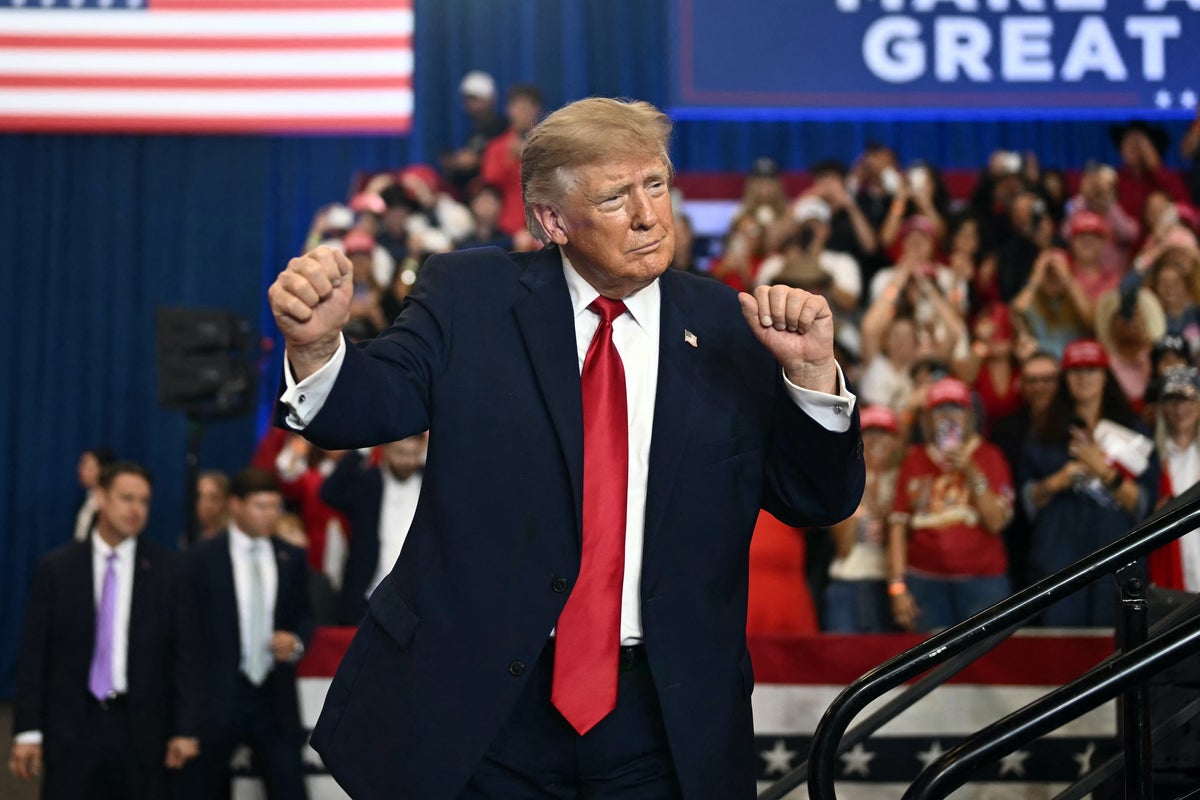
Remarkably, despite the headwinds, many of Trump’s MAGA loyalists still back him. This point was underscored by the Harrisburg event I attended as well as Trump’s midterm rallies, where attendees still enthusiastically chant “U.S.A.” and are decked out in red caps and MAGA merch.
I’m an anthropologist who has been studying Trump and his MAGA movement for years. I wrote a newly updated book, It Can Happen Here, on Trumpism and U.S. history. I have previously written about why people voted for Trump in 2024.
Based on my research, I see three key reasons some voters still back him. Meuser stressed all three at the Harrisburg rally as he warned of “lunatic” left socialism while extolling the Trump administration’s track record, including the immigration crackdown.
While nervous about the war and inflation, many Trump supporters respond to fearmongering about “radical left” Democrats, some of whom, Trump contends, want to drive the country off a communist cliff.
If Trump has long harped on this putative radical left danger, his warnings have gained new traction with the visibility of progressive hard-liners like Michigan Senate candidate Abdul El-Sayed and the democratic socialist mayor of New York, Zohran Mamdani.
Beyond the threat of socialism, Trump claims that under Democrats the U.S. would fall back into a “dark age” of economic mayhem, curtailed rights and religious freedoms, rampant crime and imperiled national security. MAGA stalwarts echo his warning of “Doomsday” scenarios.
To underscore this point, Trump and his loyalists are connecting the massive and sometimes destructive protests in France to democratic socialists and the “radical left.”
For example, the White House posted a video on X featuring rioting and arson in France which warns, “Pay attention before it’s too late. This is the future Democrats want for America.” Other Trump supporters warn the unrest illustrates the civilizational threat of immigration and a looming “global Islamic takeover.”
MAGA pundits like Jesse Watters and Greg Gutfeld are encouraging this use of what they call “fear porn” to drive the 2026 midterm vote.
Trump won in 2024 largely due to two bread-and-butter election issues: the economy and immigration.
Alex Hinton is a Distinguished Professor of Anthropology; Director, Center for the Study of Genocide and Human Rights, Rutgers University - Newark.
This article is republished from The Conversation under a Creative Commons license. Read the original article .


