Why South Africa needs collective leadership, not strongmen - IOL
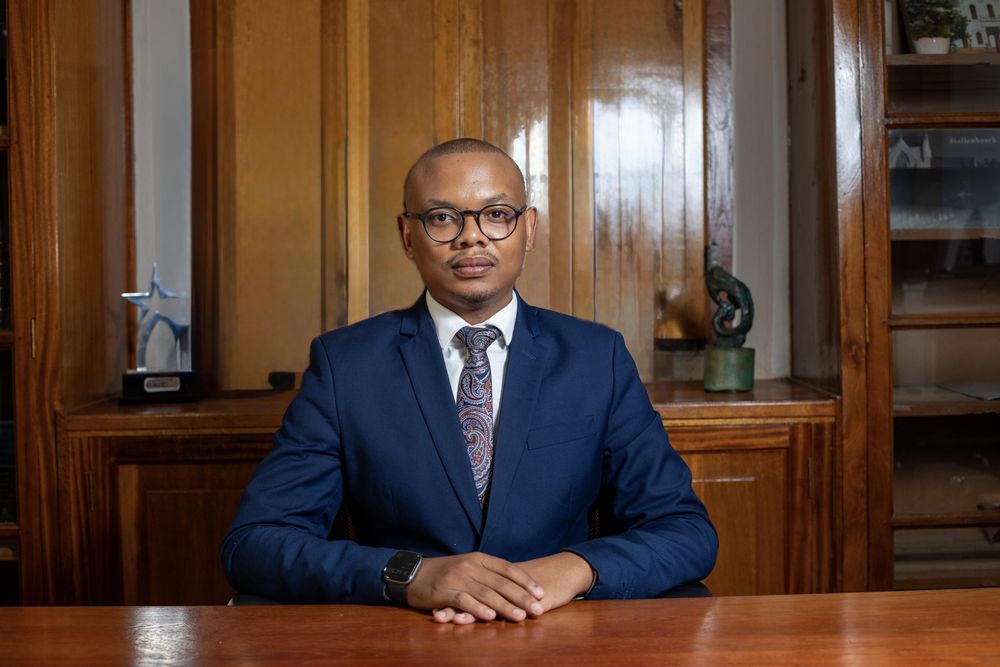
Thembalethu Seyisi is Head: Law Reform, Advocacy and Institutional Partnerships at the Centre for Social Justice at Stellenbosch University.
Democracies around the world are struggling. That is no longer an alarmist conclusion but a sober finding of some of the world’s most established democracy monitors. The 2025 Freedom House Report found that global freedom has declined globally for the 19th consecutive year with people experiencing deterioration in their political rights and civil liberties. The 2026 V-Dem Institute Democracy Report estimates that 74% of the world’s population (6 billion) now lives in autocracies and almost all aspects of democracy register far-reaching declines during the last decade – a “great reversal” compared to 25 years ago.
The warning signs are not limited to one region. In the United States, V-Dem says democracy has fallen to its lowest level in more than 50 years, driven largely by executive overreach and weakening institutional constraints, making it lose its long-term status as a liberal democracy. In Zambia, support for democracy remains strong, yet Afrobarometer found satisfaction with the way democracy works fell from 71% in 2022 to 54% in 2026. In Uganda, nearly three-quarters of citizens still say they prefer democracy, even as opposition to authoritarian alternatives has weakened. The country’s January election was followed by allegations of fraud, an internet blackout and a crackdown on opposition supporters.
These countries are not the same, but together they illuminate a dangerous pattern. Democracy rarely disappears in a single dramatic moment. It is hollowed out gradually: when citizens lose faith that participation matters; when institutions become obstacles to be bypassed; when disagreement is recast as disloyalty; and when frustration creates an appetite for the one person who promises to fix everything.
The strongman is democracy’s oldest seduction. When societies are anxious or exhausted, the promise of one decisive leader can feel reassuring. We tell ourselves that what is needed is someone tough enough to cut through the noise, override the bureaucracy and get things done.
Citizens become smaller. This is one of the central arguments in a forthcoming book We Lead: The Art of Collective Leadership From South Africa To The World, that I co-authored with Dr Louise van Rhyn. When we position leaders as saviours, people step back. They underestimate their own capacity and quietly hand responsibility for the future upwards.
The search for a hero can become tolerance for bullying; the desire for certainty can slide into acceptance of control; and powerlessness can make authoritarian claims sound attractive. The alternative is not leaderlessness. The new understanding shifts from heroes to citizens, from command to contribution, from power-over to power-with. Leadership is exercised wherever people influence what happens next. Democracy depends on the same insight. In this conception of collective leadership.
Afrobarometer’s latest findings should unsettle us. Only 49% of South Africans say democracy is preferable to any other form of government, and just 29% say that the Government of National Unity is somewhat effective in solving the country’s problems. In the 2021 local government elections, turnout fell to 45.87% of registered voters which was the lowest turnout for a democratic election in the country.
On 4 November, South Africans will vote again in local government elections. These are the elections closest to daily life: the tap that runs or does not, the refuse that is collected or left on the pavement, the streetlight that works, the road or pothole that is repaired, the public space that is safe. The councillor elected on 4 November cannot repair local democracy alone. Nor can the mayor or the President. Functional democracy needs citizens who bring what they have — skills, time, experience, courage, professional knowledge and local knowledge.
That may mean the accountant who helps a school governing body with its finances; the engineer who serves on a water forum; the activist who organises a neighbourhood clean-up; the businessperson who opens a door for young entrepreneurs; the nurse who challenges dysfunction at a clinic; the resident who attends the ward committee meeting rather than only complaining afterwards. None of these acts are heroic. That is precisely the point. South Africa’s own history teaches us that meaningful democratic change has never been the work of one extraordinary man. Apartheid was not defeated by one person. The transition was not authored by one person. It took movements, workers, faith communities, students, women, civic organisations, negotiators, international allies and countless people whose names never entered the history books. Leadership was exercised in kitchens, church halls, union buildings and community rooms as much as in formal institutions.
That is the democratic task before us again. Active citizenship is not naïve optimism. It is disciplined responsibility. Our Constitution announces: “We, the people of South Africa.” These words locate authorship. They remind us that democracy is not something politicians do for us. It is something we practise with one another. It survives when citizens refuse to become spectators, protect institutions from capture, demand accountability without surrendering agency, and recognise that their freedom is bound up with the freedom of others.
On International Day of Democracy, 15 September, the question is not which leader will rescue democracy. The question is whether we, the people, are prepared to lead.
*Thembalethu Seyisi is Head: Law Reform, Advocacy and Institutional Partnerships at the Centre for Social Justice at Stellenbosch University.