Why the Goa BJP is sparring with its ally
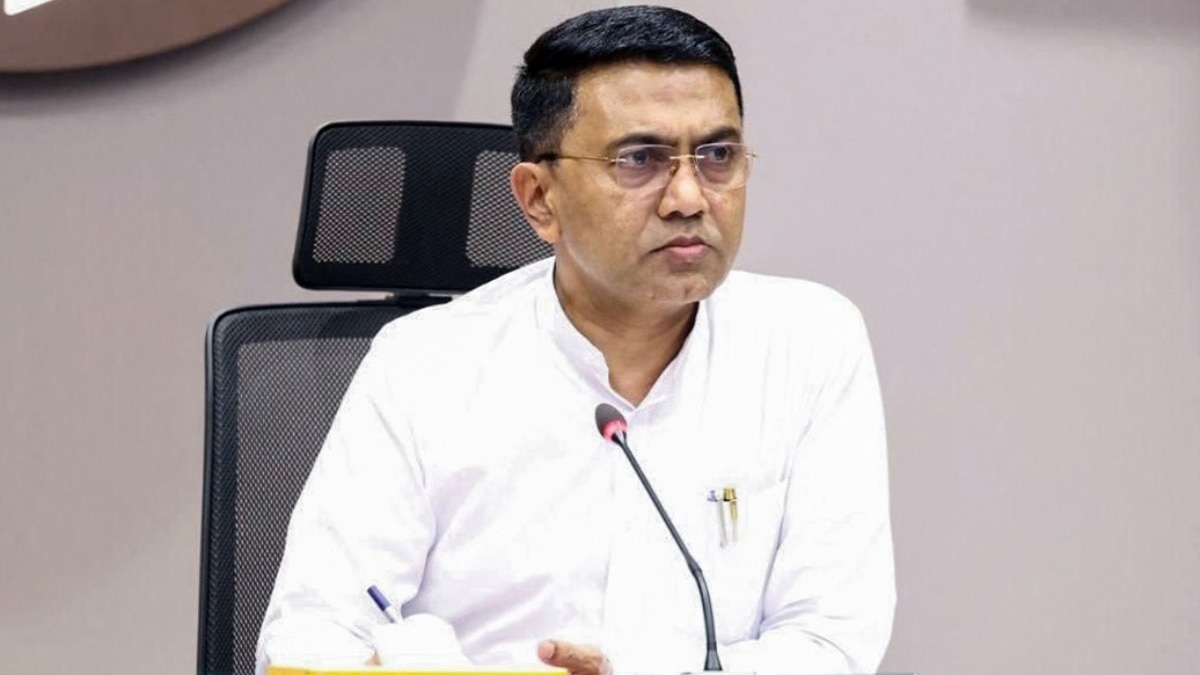
The grand alliance of opposition parties in Goa is surely facing turbulence, but it’s not quite smooth sailing for the Dr Pramod Sawant government either—with the ongoing sniping between his Bharatiya Janata Party (BJP) and its coalition partner, the Maharashtrawadi Gomantak Party (MGP). Seemingly eager to contest the assembly election due in early 2027 on its own, the MGP is said to have started its preliminary work towards that end.
Ridiculing the possibility, CM Sawant told a local news channel in an interview that the MGP’s current tally of two MLAs—power minister Ramakrishna ‘Sudin’ Dhavalikar, who represents Madkai, and Jit Arolkar, who bagged the Mandrem seat—in the 40-member Goa assembly was the high-water mark of its electoral success. “They must know their limitations,” he said, recalling how the MGP had drawn a blank in 2017 when it contested in alliance with the Goa Suraksha Manch (GSM), led by former RSS functionary Subhash Velingkar, the Shiv Sena and smaller parties, as well as in 2022, when it allied with the Trinamool Congress (TMC).
Dhavalikar, however, was quick to retort that his party’s presence in the fray was responsible for Sawant’s defeat in the 2008 bypoll for the Pale seat (present-day Sanquelim constituency, which Sawant is representing for the third term). “The MGP is strong in Goa, with a minimum of 3,000 votes in every seat,” he said. “We just need workers who can awaken the votersand then there will be no space for any other party in Goa.” He claimed that many people fondly recall the MGP’s 17-year rule in the state following the end of the Portuguese regime. He said the MGP’s post-poll alliance with the BJP had been finalised at the “central level” by senior leaders such as Union home minister Amit Shah.
The MGP has been part of governments headed by the BJP and the Congress since 2002. In 2019, Dhavalikar was dropped as a deputy chief minister from the Sawant cabinet after two of the other three MGP MLAs (Manohar ‘Babu’ Azgaonkar and Deepak Pauskar) split to join the BJP.
Dhavalikar has launched the MGP’s expansion campaign in the Ponda assembly constituency, leading to speculation about whether he would contest from there, leaving his Madkai seat to son Mithil. His brother Pandurang a.k.a. Deepak, who is the MGP president and a former minister, may contest from either Shiroda or Priol. The Ponda, Shiroda and Priol seats are held by the BJP. Priol MLA Govind Gaude, a former minister, is seen as a trenchant critic of the Dhavalikars.
In 1963, Dayanand ‘Bhausaheb’ Bandodkar had led the MGP to a swashbuckling victory against the Congress in the Goa, Daman and Diu assembly election. This was the first time any party had come to power in an Indian state or Union territory on the Bahujan Samaj plank. Bandodkar was a member of the small but influential Gomantak Maratha Samaj, and commanded the loyalty of a large section of ‘backward’ and intermediary-caste Hindu voters. After Bandodkar’s demise, his daughter Shashikala Kakodkar a.k.a. Tai led the MGP government in the former Portuguese colony. Reduced to a pale shadow of its former self with the BJP having weaned away a large chunk of its base in the Hindu Bahujan Samaj, the MGP today is led by the Dhavalikar brothers, who come from a family of temple priests.
In case it runs solo, the MGP may walk away with a section of the Hindu Bahujan votes, eating into the BJP’s core vote base. In what may add to the BJP’s troubles, the Shiv Sena led by Maharashtra deputy chief minister Eknath Shinde—a constituent of the BJP-led National Democratic Alliance (NDA)—plans to contest alone in 21 constituencies in Goa. Running on a sons-of-the-soil plank, the Shinde-led party seeks to secure its first opening outside Maharashtra. It has deputed former Lok Sabha MP Gajanan Kirtikar and former Mumbai corporators Raju Pednekar and Dilip Naik to lead the charge in Goa. Pednekar and Naik are in charge of North and South Goa, respectively. The party is looking at focusing on the Hindu and pro-Marathi votes.
The only time a Shiv Sena candidate was elected to an assembly outside Maharashtra was in 1991, at the peak of the Ram Janmabhoomi movement, when Pavan Kumar Pandey won the Akbarpur seat in Uttar Pradesh. The failure to replicate that success was attributed largely to the inability of the then undivided Shiv Sena’s leadership to manage the contradictions between its originally nativist, pro-Marathi manoos position in Maharashtra and its subsequent shift to Hindutva in the 1980s, when Sena supremo Bal Thackeray emerged as a Hindu mascot.
In 2022, the undivided Shiv Sena fielded 10 candidates in Goa and secured 1,726 votes—0.18 per cent of the total polled—in alliance with the undivided Nationalist Congress Party (NCP), which contested in 13 constituencies.
Maharashtra and Goa have strong historical and cultural links, and Marathi-speaking Hindus from Goa are part of the Shiv Sena’s cohort in Mumbai and elsewhere. Leaders from the Shiv Sena (Uddhav Balasaheb Thackeray) like Anil Desai, the Lok Sabha MP from Mumbai (South Central), MLA Sanjay Potnis and former MLA Prakash Phatarpekar hail from Goa. In the Shinde-led Shiv Sena, Pednekar and Naik, too, have roots in Goa.