Why Trump's F-35 jet sale to Saudi Arabia has sparked China spying fears
For decades, the US has fiercely guarded its most sensitive military technologies from the prying eyes of China. However, Donald Trump's rare move (we will come to this later) to sell the F-35, America's most advanced fighter jet, to Saudi Arabia now threatens to undermine years of painstaking efforts to protect those secrets. The reason? China's close security partnership with Saudi Arabia.
With increasing threats from Iran in the east and Tehran-backed Houthi militants in the south, Saudi Arabia has long sought to buy the world's most advanced warplane. The F-35 jet is equipped with stealth technology that helps it evade detection. Under the proposed USD 24.3 billion deal, Saudi Arabia will receive 48 F-35 jets. However, it will require approval from the US Congress.
It will undoubtedly be a massive boost to the Royal Saudi Air Force, which does not have a fifth-generation stealth fighter jet in its arsenal. Saudi Arabia currently operates a mixed fleet that includes US-made F-15s, as well as European-made Tornado and Eurofighter Typhoon jets. Saudi Arabia has long sought to buy the F-35, arguably the world's most advanced warplane F-35 SALE: WHY CHINA IS THE WORRY?
However, the prospect of Saudi Arabia getting access to America's most prized fighter jet has set off alarm bells in the US intelligence community. In an internal memo, US analysts have raised concerns that China could acquire F-35 jet technology through spying in Saudi Arabia, The New York Times reported.
While Saudi Arabia and the US have had decades of military cooperation, the kingdom has expanded military cooperation with China in recent years. The shift has not been sudden.
For decades, Saudi Arabia has been by far the largest buyer of American weapons and defence equipment. However, of late, the Saudi leadership has been concerned about America's commitment to the kingdom's security.
Two incidents are likely to have sowed doubts. The lukewarm response by the US to Houthi drone attacks on Saudi Arabia in 2019 and the May 2025 Israeli attack on Qatar, a close US ally.
Secondly, Riyadh always had a grievance over the US's reluctance to provide state-of-the-art weapons and technologies to it. It gave China space to deepen defence cooperation with Saudi Arabia.
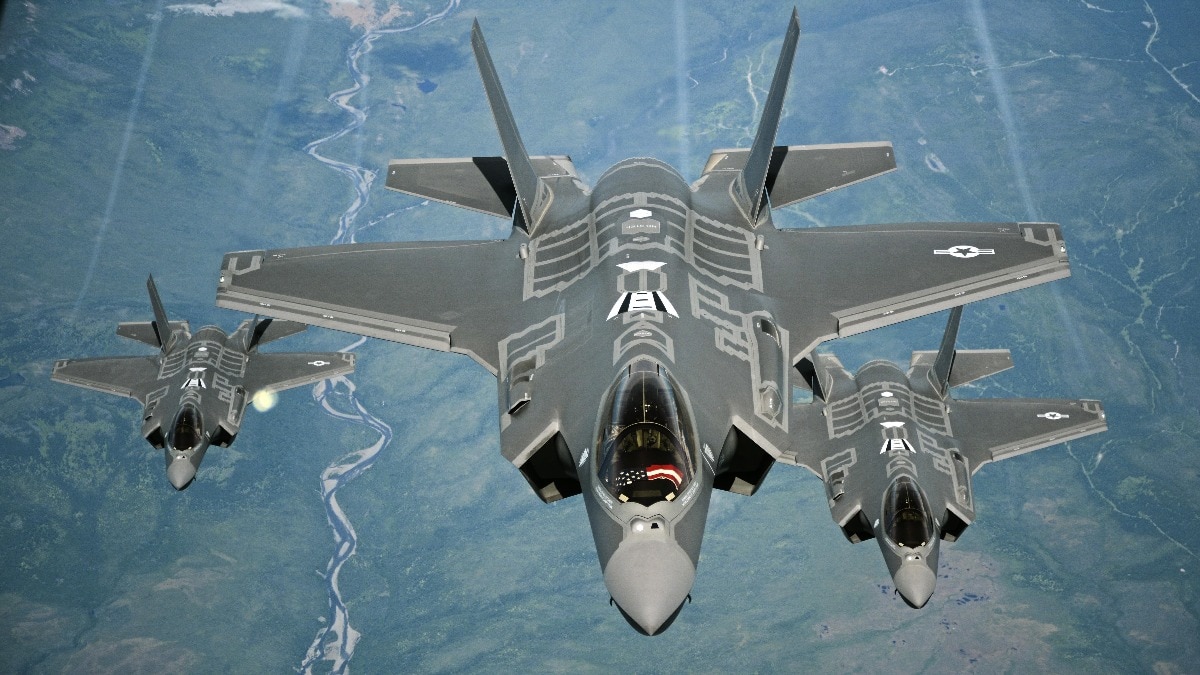
Ballistic missiles and advanced combat drones form the bulk of Saudi defence purchases from China. Moreover, the Chinese military is also helping the Saudis in setting up missile production facilities. This means Chinese military access to Saudi bases. Moreover, Riyadh also uses Chinese technology in its telecommunications infrastructure. The F-35 is a fifth-generation multirole fighter (AP) US PENTAGON RAISES CONCERNS
Against the backdrop of such close Saudi-China cooperation, the proposed F-35 jet deal has raised the hackles of the US intelligence community. Defence officials fear that Riyadh might share the sensitive technology with China, BBC reported.
"It could essentially put the crown jewels of American military technology within reach of the Chinese Communist Party," US Representative Raja Krishnamoorthi, a Democrat, said.
In fact, the Pentagon also raised concerns over it in a report earlier this year. The key concern is protecting the advanced radar and surveillance technology of the F-35 jet.
The report, according to the NYT, stressed that only Saudi and US officers should have access to secure sites where the F-35 technology would be kept. It also called on the US administration to press Saudi to limit contact with Chinese military and intel officials.
It also raised concerns about Saudi using equipment from Huawei and ZTE, two major Chinese technology companies, in defence installations.
Such concerns have long been at the heart of the US's reluctance to sell its most advanced jets to Arab nations.
In fact, US intel agencies had raised similar concerns during Trump's first term when he sought to sell F-35 jets to the UAE. The trade-off was that the UAE would normalise relations with Israel. In 2020, the UAE and other Arab nations signed the Abraham Accords. However, Saudi Arabia stayed out.
Now, Trump's decision to sell the F-35 has raised questions about whether there has been any silent deal with Saudi Arabia to join the Abraham Accords.
In his second term, the eccentric US President has cultivated a close relationship with Saudi Crown Prince Mohammed bin Salman. Last year, during Trump's visit to Riyadh, the countries sealed a USD 142 billion arms deal. The White House had then called it the "largest defence sales agreement in history".
The latest proposed sale of the F-35, built by Lockheed Martin, is part of that deal. On Wednesday, the Houthis claimed to have shot down a Saudi F-15 jet with a locally made missile THE ISRAEL FACTOR
Now, in the intro of my news report, I had mentioned that this was a rare move by the US. Stay with us, and I will explain why.
In the Middle East, Israel is the only country that flies the F-35 fighter jet. As mandated by law, US administrations have ensured that Israel maintains its "qualitative military edge" in the region since the 1973 Arab-Israeli War.
If the US-Saudi deal goes through, it will place Riyadh on a level with Tel Aviv - a scenario that may rankle Israel. Israel currently has a fleet of 50 F-35 jets, which have recently been used in strikes against Iran. Under the proposed deal, Saudi Arabia will acquire 48 jets.
The US Congress now has a month to scrutinise or attempt to block the F-35 sale to Riyadh.
However, there have been recent instances where the Trump administration has bypassed the congressional approval process to expedite weapon shipments to Israel amid the Iran conflict. It may pull off a similar move with the Saudi jet deal as well, NYT reported.
The US announcement comes two days after the Houthis claimed to have shot down a Saudi F-15 fighter jet over Marib, amid their escalating conflict with the Saudi-backed Yemeni government forces.
Trump's decision is also being viewed as an olive branch to Riyadh, which was reportedly miffed by Washington's refusal to directly intervene in its fight against the Iran-backed Houthis.
But the boost to Saudi Arabia's air power comes with a major US concern. Could China get too close to the secrets of the US's most advanced fighter jet?- EndsPublished By: Abhishek DePublished On: Sep 18, 2026 12:11 IST