Why Waqf Board's shelter plan for talaq victims in poll-bound Uttarakhand matters
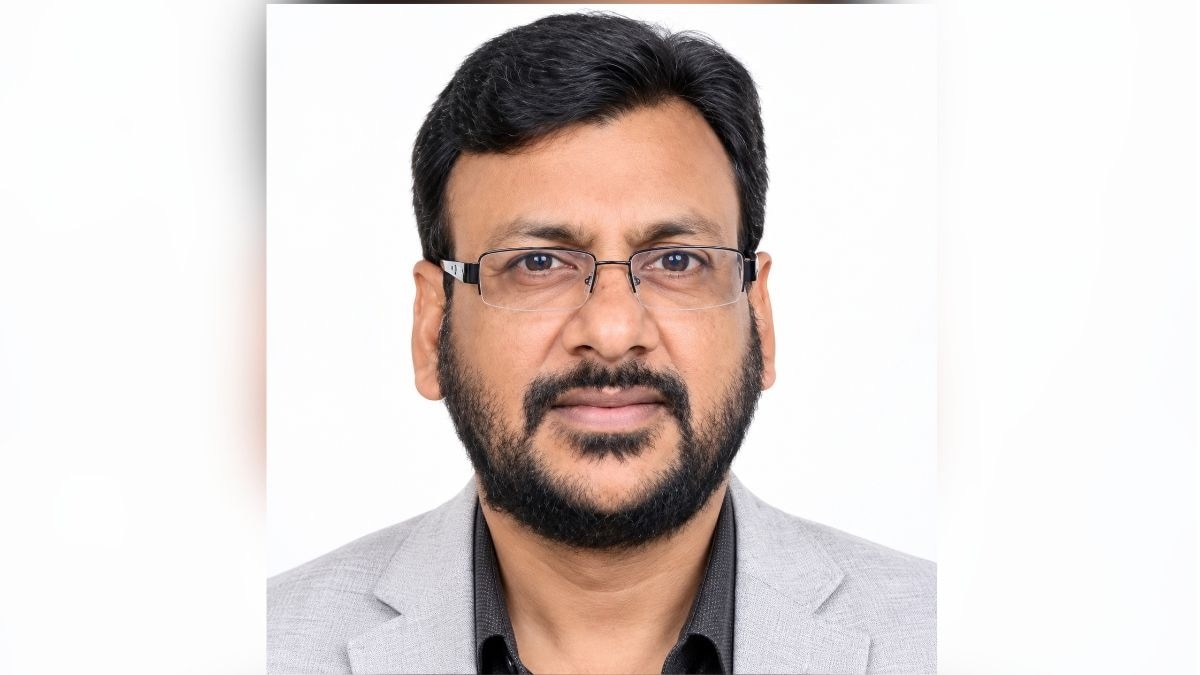
The Uttarakhand Waqf Board recently announced that women who have suffered triple talaq or halala as well as destitute widows will be offered shelter in properties owned by the Board as part of an effort to ensure a dignified life for them.
The welfare proposal, coinciding with the run-up to assembly polls due early next year, is seen as also fitting into a wider move by the BJP government in the state and its Muslim leaders to offer a different kind of outreach to the Muslim community.
Uttarakhand Waqf Board chairman Shadab Shams has said the Board will place a proposal in its meeting in the first week of October for use of its properties as accommodation for women left without support after marital disputes. The plan is still at the proposal stage and will require scrutiny for legal and practical feasibility.
Shams has said eligible women would be identified through verification. The Board is also looking at using some of its housing stock in Dehradun for the purpose.
Shams, who is a BJP leader, told INDIA TODAY that in many cases, women were left homeless after being separated from their husbands; often this was with their children. He argued that the Waqf Board and the BJP governments at the Centre and in Uttarakhand could provide such women a support system. The proposal, he argued, was also a way of using Waqf assets for the benefit of vulnerable members of the Muslim community.The announcement follows another initiative by the Board to address issues concerning Muslim women. The Board has been working on a revised nikahnama (marriage contract in Islam) that seeks to address matters such as triple talaq, halala and inheritance rights for daughters. The exercise has been presented as an attempt to bring gender equality to Muslim marriages.
The housing proposal has a wider context. The Pushkar Singh Dhami government has already enforced a Uniform Civil Code (UCC). The framework covers marriage, divorce, inheritance, adoption and succession and is formally applicable across communities in the state.
The political significance of the Waqf Board’s approach lies in the fact that it allows the BJP to engage with Muslim voters through issues of welfare and reform rather than only through the narrative of minority politics.
Muslims account for roughly 14 per cent of the state’s population, according to the 2011 Census, with their concentration particularly high in the Haridwar and Udham Singh Nagar districts, besides significant numbers in Dehradun and Nainital districts. The state’s Muslim electorate has traditionally been more favourable to the Congress.
For the BJP, then, even a limited shift among sections of Muslim voters can matter in closely contested seats in the state’s plains. But the more immediate political objective may be to create Muslim platforms that can communicate the party’s policies directly to the community.
The Waqf Board had been moving in this direction for some time. Under Shams, it has pushed the idea of modernising madrasas by introducing NCERT (National Council of Educational Research and Training) curriculum and infra upgrades. It has also promoted Sanskrit and, controversially, the teaching of the story of Lord Ram in some ‘modernised’ madrasas. The Board has described these initiatives as attempts to combine religious education with mainstream schooling and promote social integration.
All of this is happening against a much broader political backdrop in Uttarakhand. The Dhami government, in its second term, has taken various decisions that have brought questions of religion, identity and the relationship between communities into public debate. Along with UCC, the state has tightened the legal framework around religious conversion and introduced changes seen as adversely impacting minority educational institutions. The government has described such measures as administrative or social reform even as Opposition parties questioned the BJP’s motives.
Earlier, the government had announced the renaming of several places with ‘Islamic’ names in Haridwar, Dehradun, Nainital and Udham Singh Nagar, saying the changes reflect public sentiment and Indian cultural heritage. Critics have viewed some of the changes through the lens of the state’s wider identity politics.
At the same time, the government has set up a committee to study the socioeconomic, educational and cultural conditions of minority communities over the past 25 years. The committee’s mandate is administrative, but its timing, ahead of the 2027 elections and in a phase of revision of electoral rolls, has made it politically significant.
The Waqf Board’s latest proposal, therefore, sits at an interesting intersection. On one side is a state government that has made UCC, cultural identity and regulation of minority institutions important parts of its governance agenda. On the other is a BJP leadership that needs to demonstrate that its Muslim outreach is not limited to symbolic gestures.
Whether the Waqf Board proposal is implemented, how many women eventually benefit, and whether it can be expanded beyond housing to employment and financial support will determine if this becomes a substantive welfare programme or a poll message.