
Will Germany have enough gas this winter?
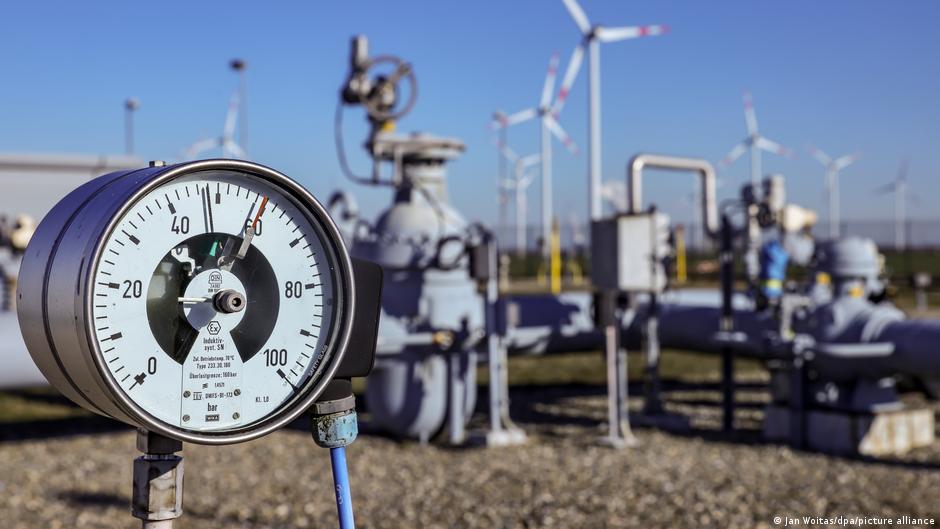
Compared to previous years, natural gas storage levels in Germany are lowImage: Jan Woitas/dpa/picture allianceAdvertisementAs of mid-September 2026, Germany had stored just about 141 terawatt-hours of gas, accounting for around 57% of the country's total storage capacity.
Last winter just under 134 terawatt-hours of gas were withdrawn from storage, according to the Federal Network Agency, the agency that monitors the country's electricity and gas networks.
At first glance, the numbers sounds reassuring, especially since last winter was quite cold and therefore required a lot of heating. But compared to previous years, natural gas storage levels are low.
On September 4, Markus Söder, the premier of Bavaria, called for intervention by the federal government.
A few days later, the opposition Green Party accused the economy minister of negligence. "The gas storage facilities are not full. We are facing a potential shortage," said Britta Hasselmann, co-leader of the Greens' parliamentary group.
Such statements have raised concerns about potential gas shortages in Germany this winter.
To assess the current situation, however, various factors such as imports and the diversification of supply sources need to be taken into account , not least since Germany is no longer as dependent on a single importer as it was on Russia until 2022.
Most experts interviewed by DW are not concerned about the winter gas supply.
Charlie Grüneberg, spokesperson for the German Gas and Hydrogen Industry association, points to the contracts that have been signed for the medium term. "Anyone who has contractually secured their gas needs for the winter with a reliable supplier will receive the agreed quantities," he said.
Sebastian Heinermann, managing director of INES, a German association for gas and hydrogen storage system operators, is more cautious.
He pointed out that it's technically possible to fill gas storage facilities in Germany to around 77%, but this would require filling at a level that "has not been observed even once in the past three weeks," Heinermann said. "If this trend continues unchanged, the fill level will reach only about 65% by November 1."
Still, the Federal Network Agency sees no cause for concern.
"The gas supply in Germany is stable," the agency's spokesperson, Nadia Affani, told DW. "Security of supply is currently guaranteed. Based on the latest information, the Federal Network Agency continues to assess the risk of a gas supply crunch as low."
Germany's Ministry for Economic Affairs and Energy shared a similar assessment. The ministry "is monitoring all developments very closely to ensure security of supply. There are currently no signs of a supply shortage," said spokesperson Susanne Ungrad.
She also pointed to an array of factors that determine the price of natural gas like available storage, ongoing imports via pipelines and LNG terminals, demand and the situation on the international energy markets.
"We are prepared for further developments," Ungrad stressed.
Grüneberg also takes a more holistic view.
"The key factor is whether enough gas can be procured and transported to and through Germany. Supply contracts, storage facilities, pipeline imports and LNG are all interlinked," he underscored.
"Thanks to investments in LNG terminals, new import routes and reverse-flow capabilities, the infrastructure is now significantly more robust than it was in 2022."
As the winter approaches and people start heating their homes more, gas prices tend to climb. This trend is already evident, said Heinermann.
"In the second quarter, the gas price across various contracts on the futures market stood at around €46 ($52) per megawatt-hour. Recently, the gas price has risen to over €80."
Olaf Geyer from the US consulting firm Arthur D. Little, who has been monitoring the German market, said there is no immediate supply problem, but: "If the winter turns out to be cold or there are disruptions on the import side, prices could rise quickly."
Grüneberg said "reliable price forecasts" are difficult to make and noted that low storage levels could cause prices to rise "if additional volumes have to be procured on the market."
However, there are no signs of a shortage on the supply side. "As things stand today, there are no indications of a physical shortage of supply by the end of winter. The futures markets are not signaling this at the moment either," said Grüneberg.
The German economy ministry points out that "the prices currently quoted for forward contracts for the winter are only slightly higher than the spot market prices for immediate transactions."
"The usual summer-winter spread, which made it economically viable to store gas during the summer months, was therefore not present," it added.
The "spread" is based on the principle of buying gas cheaply in summer and selling it at higher prices in winter. This year, gas prices rose following the closure of the Strait of Hormuz, undermining that seasonal pattern.
Geyer, who also focuses on the summer-winter spread, said storage facilities aren't fuller this time round because it hasn't been economically viable.
"For the future, we need better incentives for filling storage facilities — and risk management on the part of utilities that looks not only at the purchase price but also at how much actual consumption can deviate from projections," he underlined.
Heinermann also called for effective economic incentives to fill gas storage facilities.
"In the medium term, Germany needs a reliable market framework that, through incentives, obligations or a combination of both, ensures sufficient storage levels on a long-term basis while preserving as much market-based flexibility as possible."
This article was originally written in German.


