
With days to go before the midterms, data shows the U.S. economy is doing well
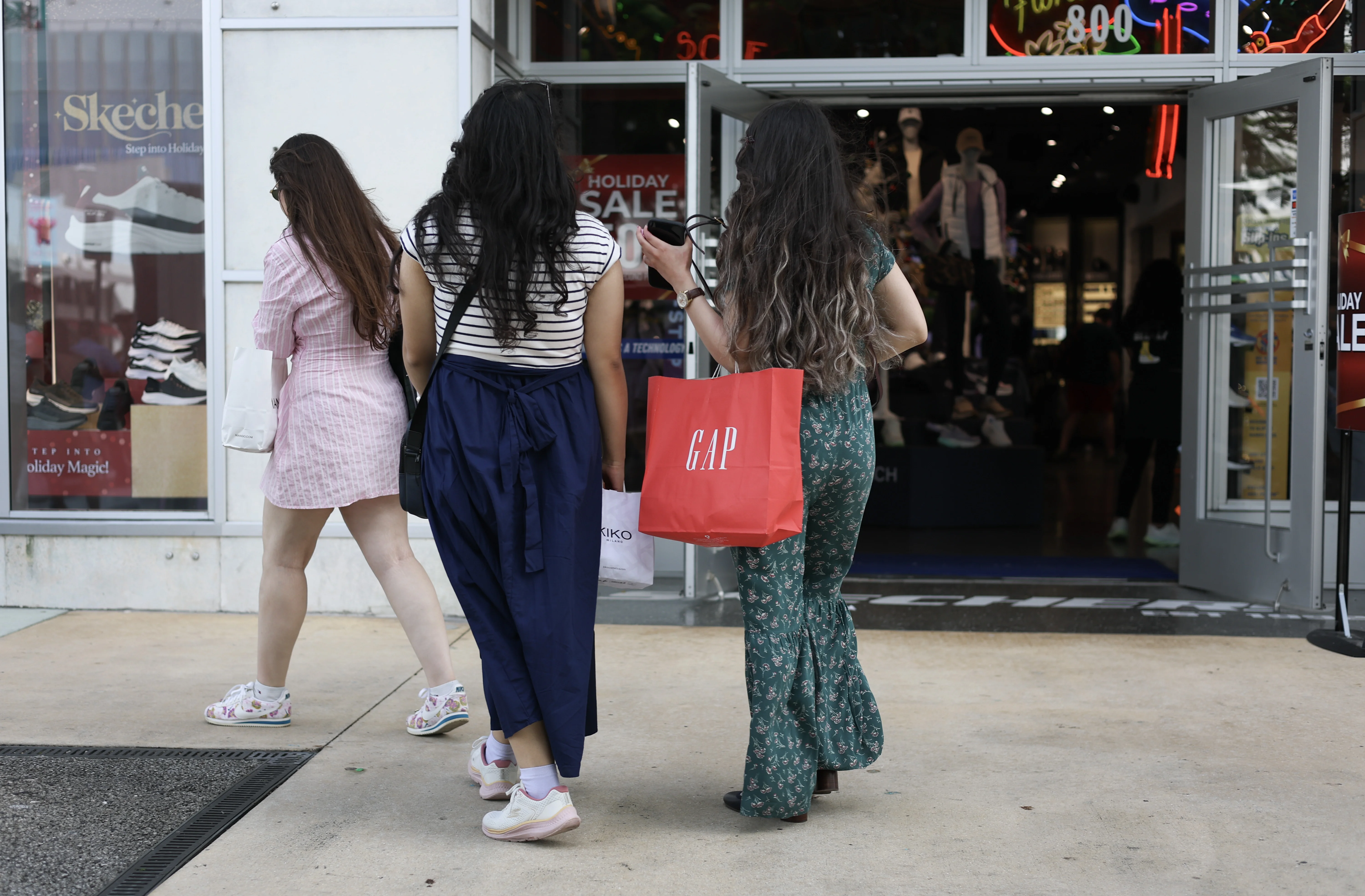
The U.S. economy grew 3.4% in the July to September quarter from a year earlier, a much faster pace of annual growth than in the second quarter. Consumer spending was one of the main drivers of growth — though many Americans continue to struggle with inflation. Joe Raedle/Getty Images North America hide caption
The U.S. economy grew faster in the summer compared to the spring, driven by consumer spending as well as investments in AI.
Gross domestic product, which broadly measures economic activity, grew at an annual rate of 3.4% July through September, according to a report from the Commerce Department released Thursday. The previous quarter GDP grew at a 2.2% annual pace.
A big driver for GDP growth in the third quarter was the strong investments from AI companies, which continue to build out data centers and spend big money in developing the technology.
Politics How a lifelong Republican came to lead the data center battle in Ohio Meanwhile, consumer spending was another of the big drivers of GDP growth, led in part by higher-income Americans who are better able to withstand stubbornly high inflation.
The sturdy GDP data comes just days before the midterm elections, with many Americans saying they feel gloomy about the economy as inflation jacks up the costs of many day-to-day necessities, while the ongoing conflict with Iran drives up energy costs like gasoline.
Although consumer spending has been growing steadily, it has not spread out evenly across households, with lower-income Americans struggling more than high-earners. Wage growth has also fallen behind inflation, further squeezing many Americans.
Siri Steven, a manager at a resale store in Decorah, Iowa, says she and her husband are putting off fixing up their more than 130-year-old house.
"We barely go out to eat now," Steven said. "I really have to be mindful of our budget and make sure that we can pay all our bills and not overdraft."
She also says her family hasn't been able to save, going paycheck to paycheck. The personal saving rate for the U.S. in September is 3.8%, according to a separate report from the Commerce Department, down from 4.1% in August.
Economy Fed holds interest rates steady even as inflation remains stubborn Prices rose 3.6% in September from a year earlier, according to the same report, faster than the Federal Reserve's 2% target. The Fed watches the Commerce Department's inflation measure closely, particularly when deciding what to do with its benchmark interest rates.
Still, the central bank decided against raising rates Wednesday, with added pressure to raise rates during the next meeting in December after Thursday's reading on prices.
Economists also are concerned about the country's long term fiscal health. Mark Zandi, chief economist at Moody's Analytics, warns that despite solid GDP figures, economic growth feels delicate. That's due to business and consumers having to navigate around Trump Administration policies, such as tariffs and the U.S. war against Iran.
"We're growing," Zandi said. "The economy is moving forward but it's a very, very fragile growth. It doesn't feel like we're kicking it in on all cylinders."
NPR does not offer or accept money for coverage or interviews. Anyone who makes such an offer or request is not an NPR employee and does not represent NPR.
