With rent of nearly S$10,000, can this Yishun family keep selling S$2 nasi lemak as costs rise? - CNA
His parents see their stall’s best-known dish as a way of giving back, leaving second-generation owner Adam Danish to make the numbers work. CNA’s Money Mind finds out what the family must do.
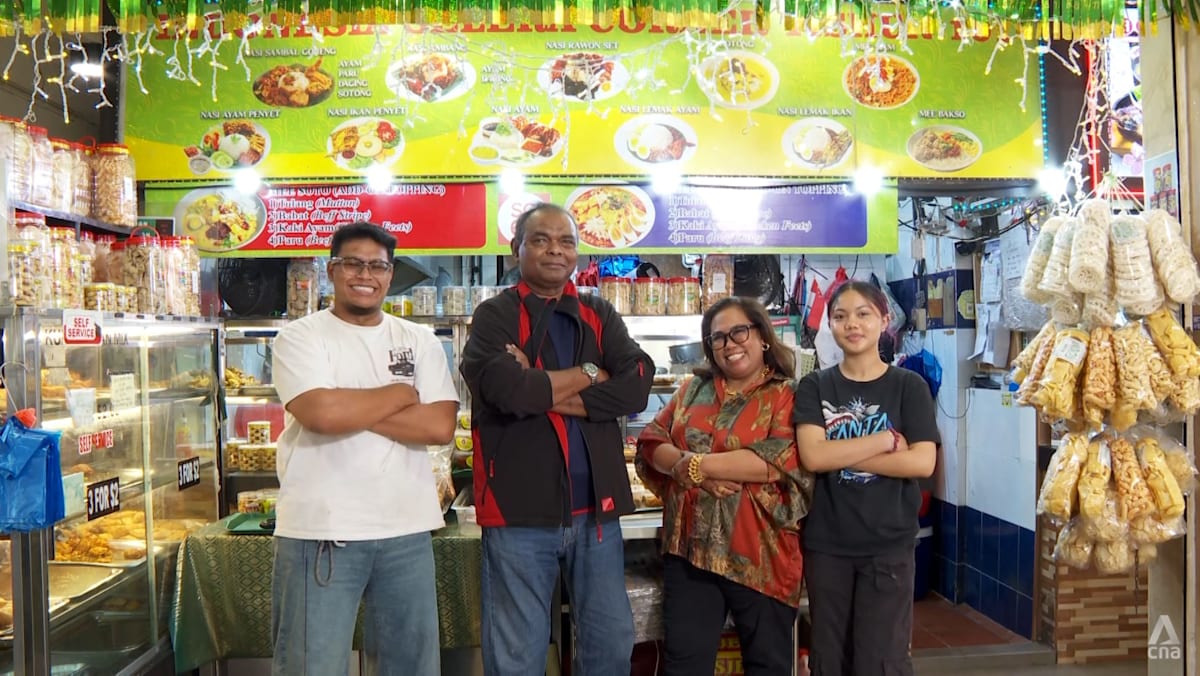
(From left): Adam Danish, Reban Kasran, Sakdiah Abdul Latiff and Nurangellina Hassan run Indonesian Selera Corner in Block 101, Yishun Avenue 5.
This audio is generated by an AI tool.
Liew Zhi Xin 26 Sep 2026 06:00AM (Updated: 26 Sep 2026 08:51AM) Bookmark Bookmark Share WhatsApp Telegram Facebook Twitter Email LinkedIn Set CNA as your preferred source on Google Add CNA as a trusted source to help Google better understand and surface our content in search results. Read a summary of this article on FAST. Get bite-sized news via a newcards interface. Give it a try. Click here to return to FAST Tap here to return to FAST FAST SINGAPORE: For a food stall whose rent is nearly S$10,000 (US$7,820) a month, but still sells nasi lemak at S$2, one might think its owners did calculate the cost of selling at that price.
Certainly, that was what Adam Danish thought until he joined the family business this year. “It was messy, because there weren’t any numbers being recorded,” said the 25-year-old second-generation owner of Indonesian Selera Corner in Yishun.
Without crunching the numbers properly, it was hard to tell if sales were covering costs — and if the family can keep the dish to S$2, a price they have maintained for more than a decade.
They run their stall in a privately owned coffee shop, where rents are commercially based and can be considerably higher than at government-run hawker centres. With utilities, the family pays S$13,000 a month, before manpower and ingredient costs.
CNA Games Guess Word Crack the word, one row at a time Buzzword Create words using the given letters Mini Sudoku Tiny puzzle, mighty brain teaser Mini Crossword Small grid, big challenge Word Search Spot as many words as you can Show More Show Less A packet of the stall’s S$2 nasi lemak. Those cost pressures are climbing too. Adam said supplies and utilities were among the stall’s biggest cost increases over the past year, and the family has already had to raise the prices of many other dishes by 50 cents.
But not the S$2 nasi lemak, which his parents began selling after an elderly customer said she wanted something smaller than their standard S$5.50 portion.
They later found the smaller serving also suited other customers, such as workers caught up in the morning rush who need to grab a quick bite to eat.
The stall now sells about 200 packets a day. For Adam’s parents, this was never meant to be a big money-maker, but rather a little something for customers including large families, low-income households and the elderly.
“I believe what we get we have to return to the public,” said his mother, Sakdiah Abdul Latiff, 53.
But can Adam and his sister, Nurangellina Hassan, 18, who goes by Angel, keep the stall going without raising the price of a dish their parents want to keep affordable?
They must get the business’ finances in order, rein in costs and find new revenue sources, Money Mind finds out.
When Adam joined the business, its accounts were not detailed enough to show how much each dish was making.
/file/attachments/orphans/Vince-Bafana-Sindane-order3_866509.jpg)