Woman Adopts Two Baby Girls—Then a Terrifying Health Crisis Strikes - Newsweek
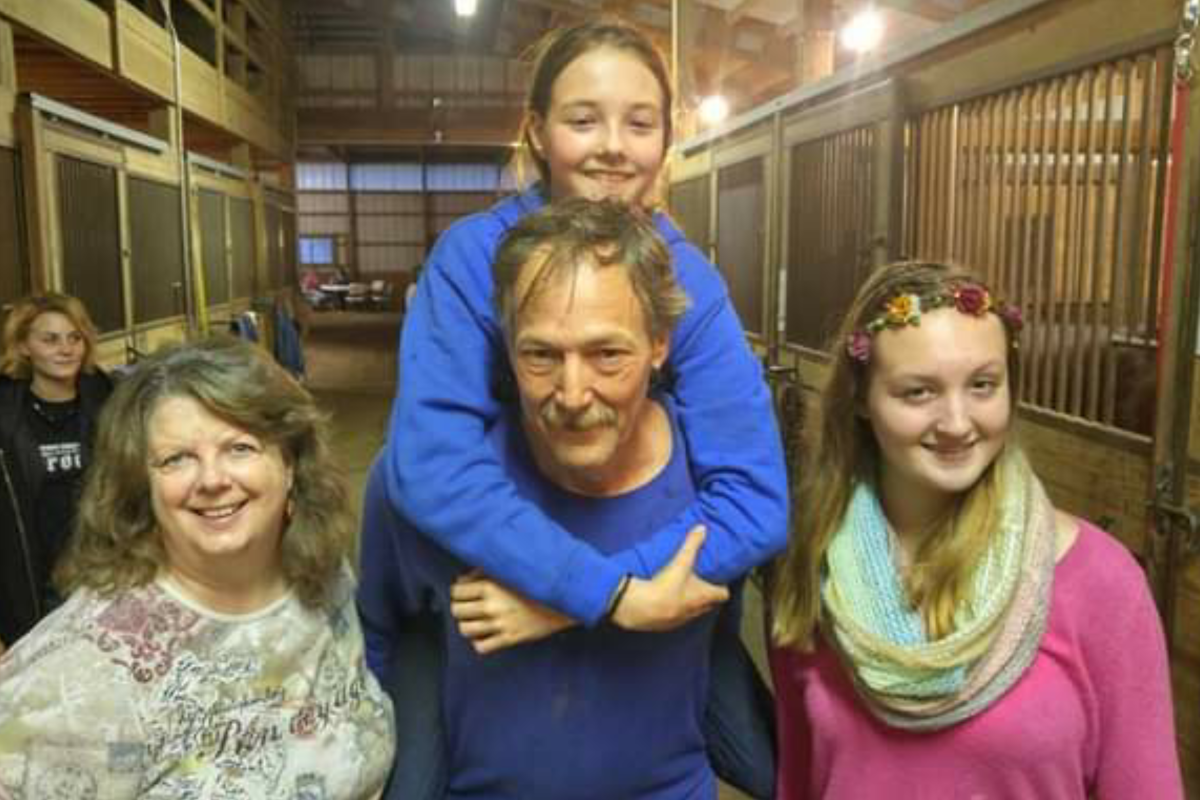
A woman from Toledo, Ohio, who waited years to become a mom, thought she was entering one of the happiest chapters of her life.
Instead, an unexpected health battle was about to unfold.
Debby Erney and her husband Bob finally stood before a judge in 2001 and officially adopted two sisters, Katie and Patty, who had become part of their family as infants.
"The moment the judge declared us to be their parents, and them to be our children, was the most-remarkable experience," Debby, now 68, told Newsweek. "It was a huge milestone."
But, within weeks of welcoming their daughters, Debby woke up one morning and barely recognized the face staring back at her.
Her eyes appeared to bulge dramatically, her face was swollen and bruised-looking, and her facial bones seemed unusually prominent.
"I thought maybe I’d had an allergic reaction to a bug bite or something," Debby said. "But it wasn't getting better throughout the day."
The changes were so severe that, when Debby went to see her primary care physician, people she knew in the waiting room didn't recognize her. Neither did her doctor initially.
Blood work revealed Graves' disease, an autoimmune condition that causes the thyroid gland to become overactive.
Debby was referred to an ophthalmologist, who quickly became concerned about the state of her eyes.
By then, her vision was deteriorating rapidly.
"The ophthalmologist did eye measurements and attempted to refract my eyes to ease my double vision by providing me [with] prism lenses," Debby said. "Then he gave me a referral to an oculoplastic surgeon who was a specialist in thyroid eye disease."
Thyroid Eye Disease (TED) is a rare autoimmune condition associated with Graves' disease. Symptoms can include bulging eyes, double vision, pain, light sensitivity and, in severe cases, vision loss.
According to the American Thyroid Association (ATA), while about one-third of people with Graves’ disease develop some eye symptoms, only a small proportion—around 5 percent—develop moderate-to-severe disease that can threaten vision.
Most cases are mild, but severe TED may require more intensive treatment, including steroids, radiation or surgery. Treatment options have expanded in recent years with teprotumumab (Tepezza), an intravenous medication targeting the underlying disease pathway that was approved by the U.S. Food and Drug Administration in 2020.
Within around 10 days of her initial diagnosis, Debby's eyesight had declined to the point where she could only make out large objects.
"It was very serious from the get-go," she said. "I needed immediate assistance."
The disease quickly transformed daily life.
Debby, who worked full time in special education supervising teachers, could no longer drive safely after a serious car accident.
She gave up her keys and relied heavily on Bob and family for support. Even routine parenting tasks became more challenging.
Her daughters adapted alongside her.
"When they were babies, they learned to help me," Debby said. "They would notice if we got too close to a wall because they would flinch and lean into me. Before they could talk, they were telling me what they needed."
Over the years, Debby underwent multiple treatments, including prism lenses, orbital decompression surgery, strabismus surgery to correct double vision, eyelid surgery and ongoing medication.
After entering a long inactive phase, the disease returned in 2023, requiring additional surgery, radiation, steroids and treatment with Tepezza.
While TED can affect anyone, Debby believes periods of intense stress may have contributed to both major flare-ups, although the exact cause remains unknown.
Today, she continues to live with the condition, which can fluctuate from day to day.
Some days, she can comfortably read a book; others, her vision is too blurry, and she relies on audiobooks instead.
More than anything, Debby hopes people understand the emotional toll the disease can take.
"The most important thing for people to understand is how isolating it can be," she said. "Some days are much more difficult than others."
Despite the challenges, Debby has no regrets.
Her daughters are now grown adults, and she recently became a grandmother.
"Throughout my journey, in particular with raising the kids, I have tried to give them every possible experience," Debby said. "It was all worth it to help those girls to thrive."