Women's Asia Cup T20: The method that reclaimed the title for India
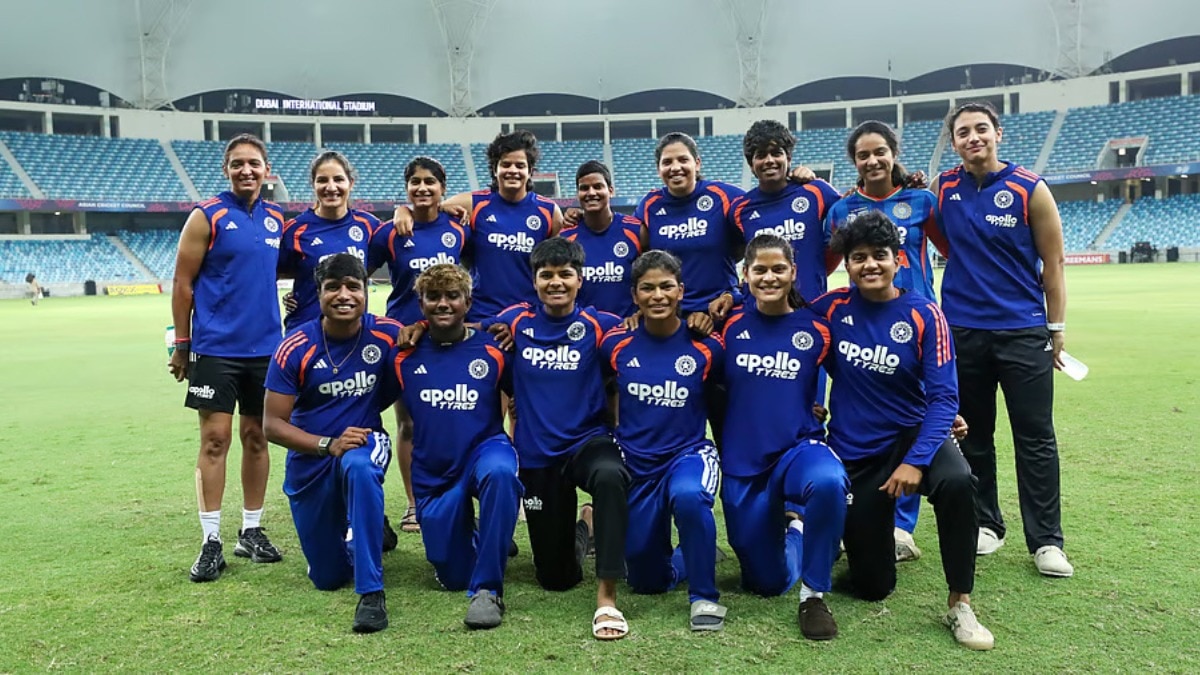
India’s women’s cricket team did not merely reclaim a trophy in Dubai on September 13. They dismantled the side that had taken it from them.
At the Dubai International Stadium, Harmanpreet Kaur’s team posted 183 for 5 and bowled Sri Lanka out for 111 to win by 72 runs, complete an unbeaten campaign and claim a record eighth Women’s Asia Cup title. Two years after Dambulla, the same finalists had produced an opposite result.
The 2024 final still explains this one. Then, India had made 165 for 6 and watched Chamari Athapaththu and Harshitha Samarawickrama chase it with eight wickets and eight balls to spare. Sri Lanka then had claimed their first Asia Cup T20 title, leaving a hole in the Indian dream. Two years on, India exacted sweet revenge.
This year, in the final, India just changed the game. They chose to bat, put 129 on the board before losing a wicket, piled up 183 runs and then used spin to break Sri Lanka’s only meaningful batting partnership before the chase could acquire a pulse.
Deepti Sharma removed Athapaththu in the 10th over and dismissed Vishmi Gunaratne three balls later. Three down and the required run rate beyond 12 an over, Lanka’s route to the title chase had effectively lost way.Revenge, in this case, was not a slogan. It was a change of method. So, how was the plan implemented?
India’s opening pair can perhaps now win a final even before the middle order arrives. Shafali Verma’s 68 runs from 39 balls, with nine fours and two sixes, was the defining innings of the final. She reached 50 from 24 balls, the fastest half-century in Women’s Asia Cup history, surpassing Smriti Mandhana’s 25-ball mark from the 2022 final against Sri Lanka.
Mandhana made 59 runs from 39 balls. The pair put on 129 runs in 12.5 overs, a record stand for any wicket in the competition. If you just add their individual scores, it was 127 runs at a strike rate of 162.82, which eventually took the game away from Sri Lanka.
By the time Shafali was caught off Chamudi Praboda, the final had already tilted. Harmanpreet later praised her for taking responsibility. That word matters as for much of her career, Shafali has been viewed primarily as the side’s explosive option. In Dubai, she was the player trusted to shape the match.
Shafali finished the tournament with 236 runs from five innings, the leading aggregate, including three half-centuries. Mandhana was second, with 213 runs.
In the final, the Indian openers fell at scores of 129 and 132 runs. India reached 150 only in the 17th over and finished at 183 for 5. Harmanpreet made 14 runs from 14 balls; Richa Ghosh 17 from 13. Sri Lanka deserves credit for tightening their lines and denying the late boundary surge. So, after that opening blast, India added only 54 runs more.
Yet, that does not matter much when the bowling attack then reduces the opposition to 111. This could, though, potentially come into play against Australia, England or South Africa, when, say, 15 extra runs can change the last four overs. The deeper question is whether India’s middle order can consistently convert a platform rather than merely inherit one.
Gunalan Kamalini’s late cameo—15 not out from five balls, with a four and a six—was a useful reminder that India have another player pushing for responsibility in the lower middle order. This was only her second T20I, and her first match of the tournament, after she came in for Pratika Rawal.
The most significant change in India’s bowling may be the emergence of Shree Charani. Her 4 wickets for 20 runs in the final, alongside Deepti Sharma’s 3 for 19, accounted for seven Sri Lankan wickets. Athapaththu briefly threatened to repeat the 2024 final. She made 36 from 32 balls and put on 58 runs with Vishmi Gunaratne. Then Deepti drew her down the pitch in the 10th over, had her stumped and, three balls later, removed Gunaratne. India had turned a potentially competitive chase into a collapse. Charani finished the job.
Those four wickets took Charani to 39 T20I wickets for India in 2026, beyond Poonam Yadav’s previous Indian calendar-year record of 35, set in 2018. She had already equalled that mark before the final. That changes her status. Charani is no longer simply the young left-arm spinner in a strong attack. She is becoming one of its first names.
There was an awkward subplot to the victory. Match reports had India shelling several chances—including two in the 19th over—and still winning by 72 runs. That is both a statement of superiority and a warning. There is a need for improvement in the field. The final showed why. India survived sloppy catching against Sri Lanka in Dubai. A stronger opponent could make them pay immediately.
India have now won the Women’s Asia Cup eight times, including four T20 editions. They have reached every T20 Asia Cup final and, across the competition’s ODI and T20 history, have now appeared in 10 finals. That is why the phrase “revenge for 2024” should not be allowed to disguise the larger picture. Sri Lanka were worthy defending champions. Their 2024 title was historic, and their route to the 2026 final was again impressive. But over this tournament, India were operating at another level. Shafali and Mandhana outscored every other batter in the field by a distance. The final did not merely restore the old order. It demonstrated the depth behind it.
Then came the awkward ending. There was no conventional trophy presentation for India. Asian Cricket Council (ACC) chairman Mohsin Naqvi, who is also Pakistan’s interior minister and chairman of the Pakistan Cricket Board, was present in Dubai. The Indian team did not accept the trophy or winners’ medals from him. And that had seemed clear from the very beginning.
Kamalini’s inclusion, Shafali’s assumption of front-line responsibility and Charani’s rise sit alongside the established core of Mandhana, Harmanpreet, Ghosh and Deepti. That is the encouraging part. India do not have to choose between experience and youth. They have both. The challenge is to keep the selection brave when the next match is tighter and the margin for experiment smaller.
What Dubai did prove is narrower, and therefore more useful. In 2024, India had made a competitive total and could not defend it once Athapaththu and Samarawickrama settled in. In 2026, India made a bigger total, broke the only partnership that threatened to matter and never allowed Sri Lanka a second act.
The revenge was not emotional. It was tactical. Start faster. Build a bigger platform. Attack the opposition’s central batter before the chase settles. Trust the spinner who is now taking wickets in clusters. That is the real harvest of India’s eighth title. The record is safe. The method that reclaimed it is what matters more: an opening pair that can overwhelm a final, a spin attack with a new wicket-taking axis, and a team increasingly willing to trust its next generation. That is what India will need when the next opponent is not playing for an Asian medal.