Worker fired for refusing polygraph test after visit to the doctor wins R105,900 compensation - IOL
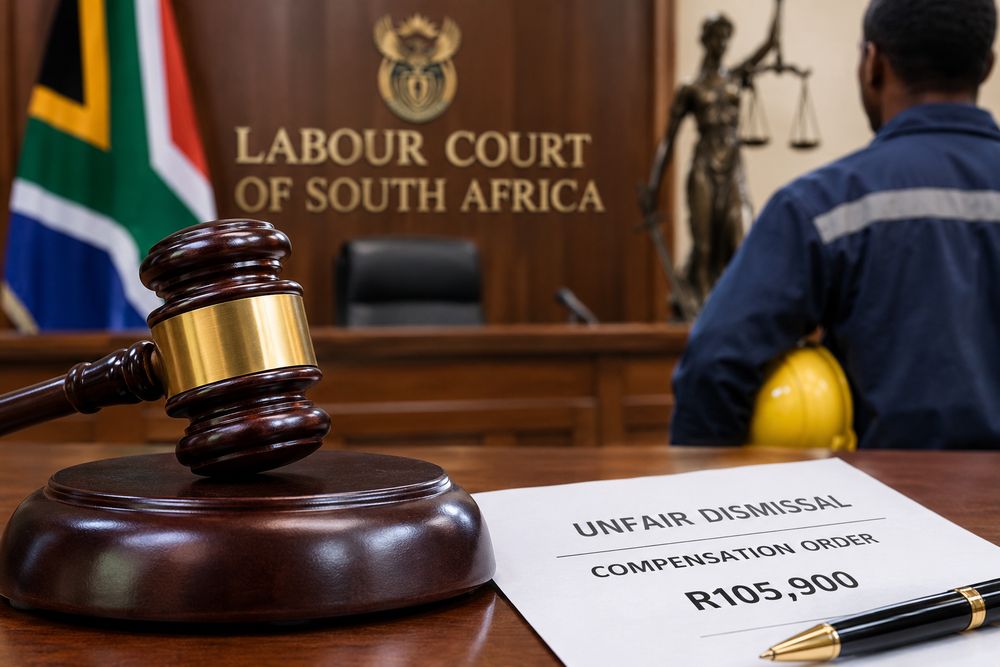
Labour Court upholds R105,900 award to worker dismissed over polygraph refusal.
The Labour Court in Johannesburg has dismissed an application by BCE Foodservice Equipment (Pty) Ltd to overturn a Commission for Conciliation, Mediation and Arbitration (CCMA) ruling that found the dismissal of an IT technician to be substantively unfair.
The court upheld an arbitration award ordering the company to pay the former employee R105,900 in compensation after he was dismissed for refusing to undergo a polygraph examination.
The judgment was delivered by Acting Judge Van Voore.
SZ had been employed as an IT Support Technician until his dismissal on February 28, 2022.
The dispute arose after SZ was involved in a motor vehicle accident on February 12, 2022.
He subsequently asked his employer for leave on February 14 to deal with matters relating to his vehicle and insurance. His request was declined, with his manager telling him that he could attend to the arrangements from the office.
SZ did not report for work that day. He later visited a doctor, underwent X-rays and was booked off for five days. He submitted the medical certificate to his employer.
The company became suspicious about the timing of his medical consultation because his appointment had been made after he had been told that his absence would be unauthorised and unpaid.
The employer contacted the doctor's rooms and established that SZ's appointment had been made at about 3.15pm on February 14.
According to the evidence before the CCMA, the company believed this raised the possibility that SZ had obtained the sick note to avoid losing pay. The company therefore required him to undergo a polygraph examination.
When SZ returned to work on February 21, he was given a written warning for arriving late on February 12 and was told that he had to undergo a polygraph test.
SZ acknowledged that his employment contract contained a provision allowing the company to require employees to undergo polygraph or breathalyser tests. However, he testified that he did not believe there was a valid reason for subjecting him to a polygraph in the circumstances.
He also told the arbitration that he did not believe polygraph testing was scientifically supported.
The company's employment contract stated that refusing a polygraph could result in a negative inference and could be regarded as a refusal to carry out a reasonable instruction, potentially resulting in disciplinary action, including dismissal.
SZ was subsequently charged with refusing to undergo the polygraph and with repudiating his employment contract. He was dismissed on February 28, 2022.
He referred an unfair dismissal dispute to the CCMA.
The commissioner found that the dismissal was substantively unfair and ordered BCE Foodservice Equipment to pay him R105,900 in compensation.
The commissioner found that the company had not established that SZ had gone to the doctor for an improper reason.
The Labour Court agreed that the evidence before the commissioner supported that conclusion.
The court noted that SZ had been involved in an accident, had subsequently consulted a doctor, had undergone X-rays and had been booked off for five days. Importantly, the employer had not challenged the validity of his medical certificate.
The Labour Court said the employer's suspicions were based largely on the timing of his medical appointment.
However, the court found that it was not possible, on the evidence before the commissioner, to establish what misconduct had actually been committed.
It also found that it was unclear how the proposed polygraph examination would have assisted the employer's investigation, given that SZ had in fact visited the doctor and the doctor had determined that he should be booked off work.
The court concluded that the company had not established a sufficient basis to invoke the polygraph provision in SZ's employment contract.
As a result, SZ's refusal to undergo the test did not amount to insubordination because the employer had not established that it had issued a reasonable instruction.
The court also rejected the suggestion that the contractual provision amounted to a blanket requirement that SZ submit to a polygraph whenever the company demanded one.
It found that, in the circumstances of the case, his visit to the doctor did not threaten the employment relationship and that the employer had failed to establish a proper basis for invoking the polygraph clause.
BCE had argued that the commissioner misconstrued the enquiry and reached a conclusion that no reasonable decision-maker could have reached.
The Labour Court rejected this argument.
It found that the commissioner's reasoning was properly grounded in the evidence and that he had considered the relevant terms of SZ's employment contract.
The court said the commissioner had not misconceived the nature of the enquiry, had not arrived at an unreasonable result and had taken account of the material facts before him.
The court emphasised that a review application is not an opportunity for the Labour Court to substitute its own view simply because another conclusion might appear plausible. The question was whether the CCMA outcome was one that a reasonable decision-maker could reach on the evidence.
The court found that the award did not meet the threshold for being set aside.
The Labour Court ultimately dismissed BCE Foodservice Equipment's application to review and set aside the CCMA award.
The company was therefore unsuccessful in its bid to overturn the finding that SZ's dismissal was substantively unfair and the R105,900 compensation order.
The court made no order as to costs.