WSU researcher Professor Ajesh Maharaj becomes first at university to receive NRF C1 rating - IOL
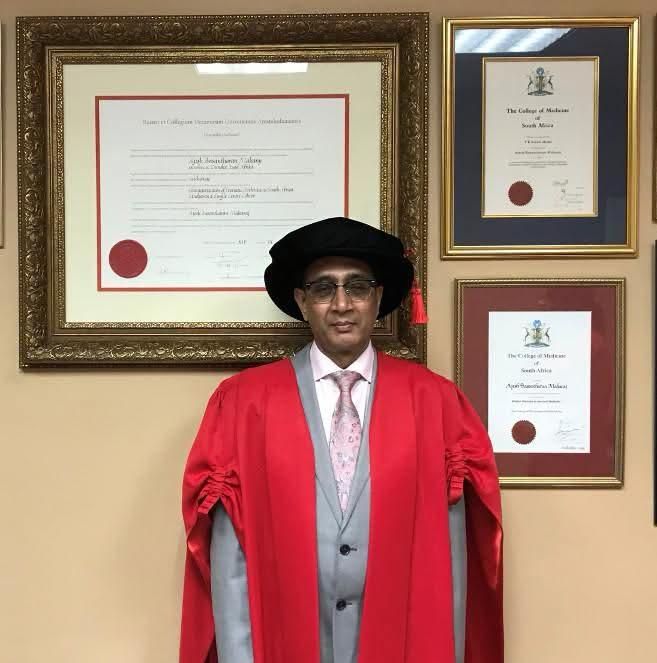
Professor Ajesh Basantharan Maharaj recently became the first researcher at Walter Sisulu University (WSU) to receive a C1 rating from the National Research Foundation (NRF), recognising his sustained contributions to rheumatology research.
The rating was evaluated by local and international peers and recognises researchers whose work has demonstrated consistent productivity, quality and impact.
Maharaj's achievement puts the spotlight on his work to advance the understanding, diagnosis and treatment of rheumatic diseases, while ensuring that the experiences and healthcare needs of African patients are represented in international research.
He said the recognition represented both personal and professional growth and motivated him to continue developing his work.
“Personally, it represents growth, perseverance, and the reward of remaining committed to my goals. Professionally, this achievement reflects my commitment to excellence, continuous development, and maintaining high standards in my work,” said Maharaj.
The achievement is important for South Africa because as of 2026, Maharaj is also the only rheumatologist from sub-Saharan Africa who is a member of the Assessment of Spondyloarthritis International Society (ASAS), an international organisation focused on advancing research and assessment in spondyloarthritis.
He also serves as Global co-chair of the Group for Research and Assessment of Psoriasis and Psoriatic Arthritis (GRAPPA) comorbidities treatment recommendations committee.
Maharaj said his involvement in international rheumatology research had reinforced the importance of collaboration between different medical disciplines.
Psoriatic arthritis, he explained, is a complex condition requiring input from rheumatology, dermatology, imaging, epidemiology and other fields.
His research journey has also been shaped by the need to address the underrepresentation of African patients in global scientific studies.
The accomplishment also comes as South Africa and other African countries face several challenges in rheumatology, including shortages of specialist healthcare professionals, delayed diagnoses, limited access to treatment and inadequate research funding.
Maharaj said African patients needed to be actively involved in generating scientific knowledge about diseases affecting their communities.
“I aim to strengthen the African evidence base by advancing research that addresses clinically relevant questions, documents patients' experiences and outcomes in our setting, and contributes African perspectives to international scientific discussions,” he said.
He added that African researchers should play a greater role in shaping global scientific research rather than simply contributing data to studies led elsewhere.
“Our responsibility as African researchers is not simply to participate in global science, but to help shape it, to generate knowledge that improves the lives of our patients, strengthens our healthcare systems and ensures that Africa is recognised not only as a source of research data, but as a leader in scientific innovation and discovery,” said Maharaj.
Looking ahead, Maharaj said his ambitions include expanding multicentre research across Africa and helping develop the next generation of African rheumatology researchers.
He hopes to contribute to establishing a sustainable African rheumatology research network that produces evidence relevant to local populations, develops research leaders and influences clinical practice and health policy.
For WSU, the C1 rating represents a milestone in the university's efforts to develop researchers whose work receives recognition beyond the institution.
The university said the achievement also supports its contribution to the United Nations' Sustainable Development Goal 3, which focuses on ensuring healthy lives and promoting well-being for all.
It further advances the institution's Vision 2040+ ambitions, particularly its One Health theme, which recognises the interconnectedness of human, animal and environmental health.