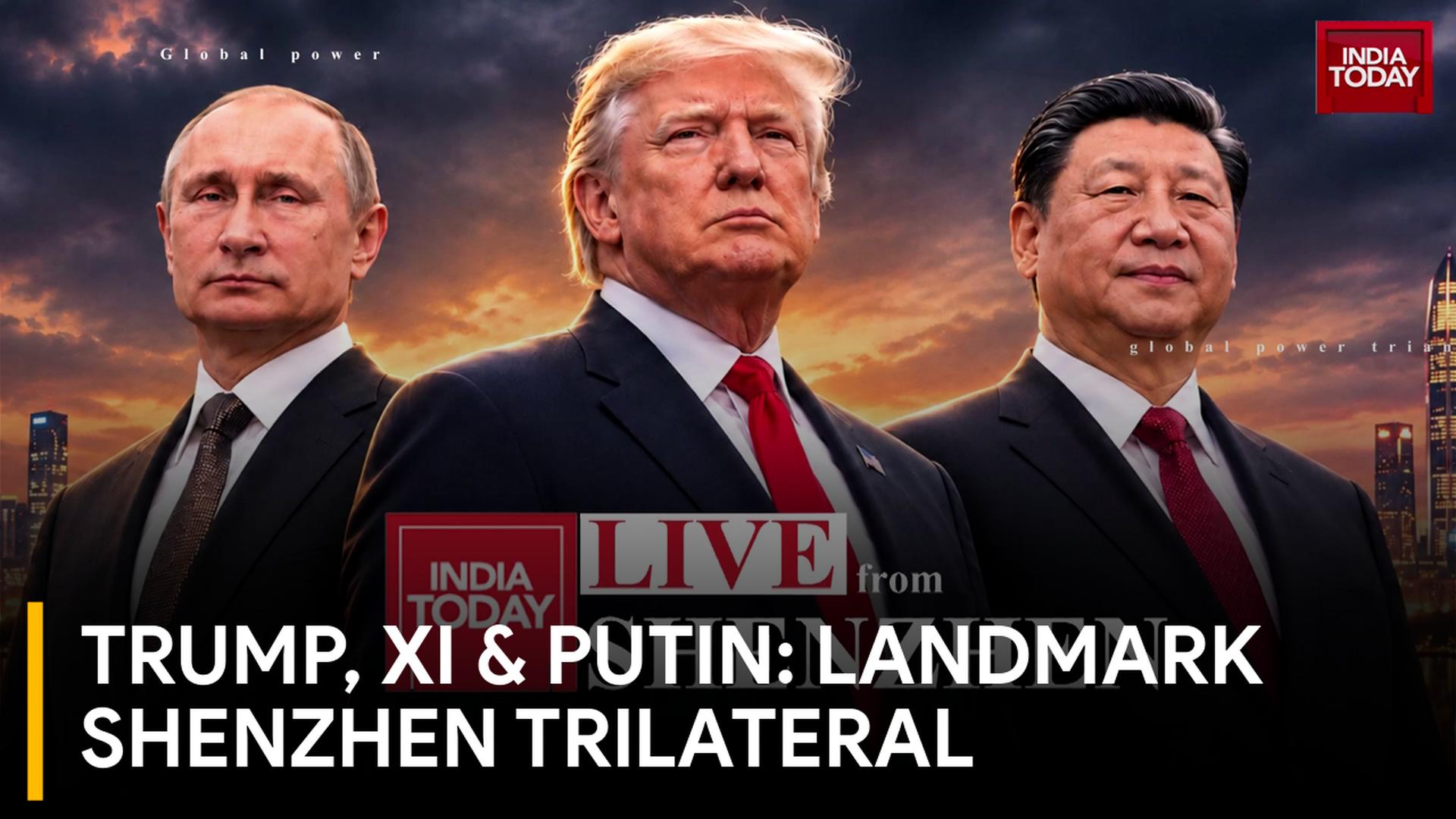
Xi, Trump, and Putin Summit Makes History but Not Much Else - Time Magazine
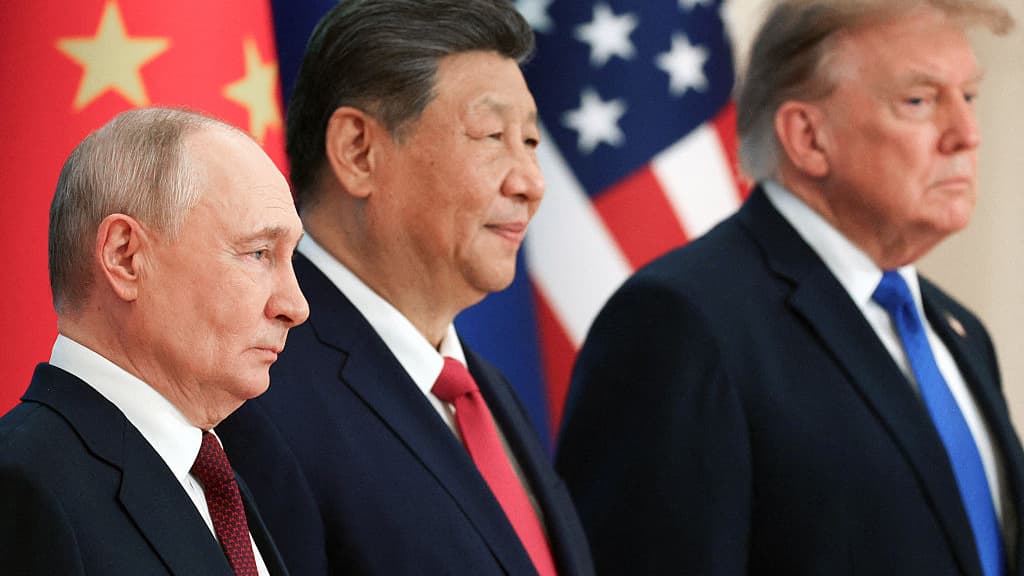
It was the first-ever meeting of the leaders of the world’s three biggest nuclear powers—one that host Xi Jinping opened by hailing its “pioneering significance.”
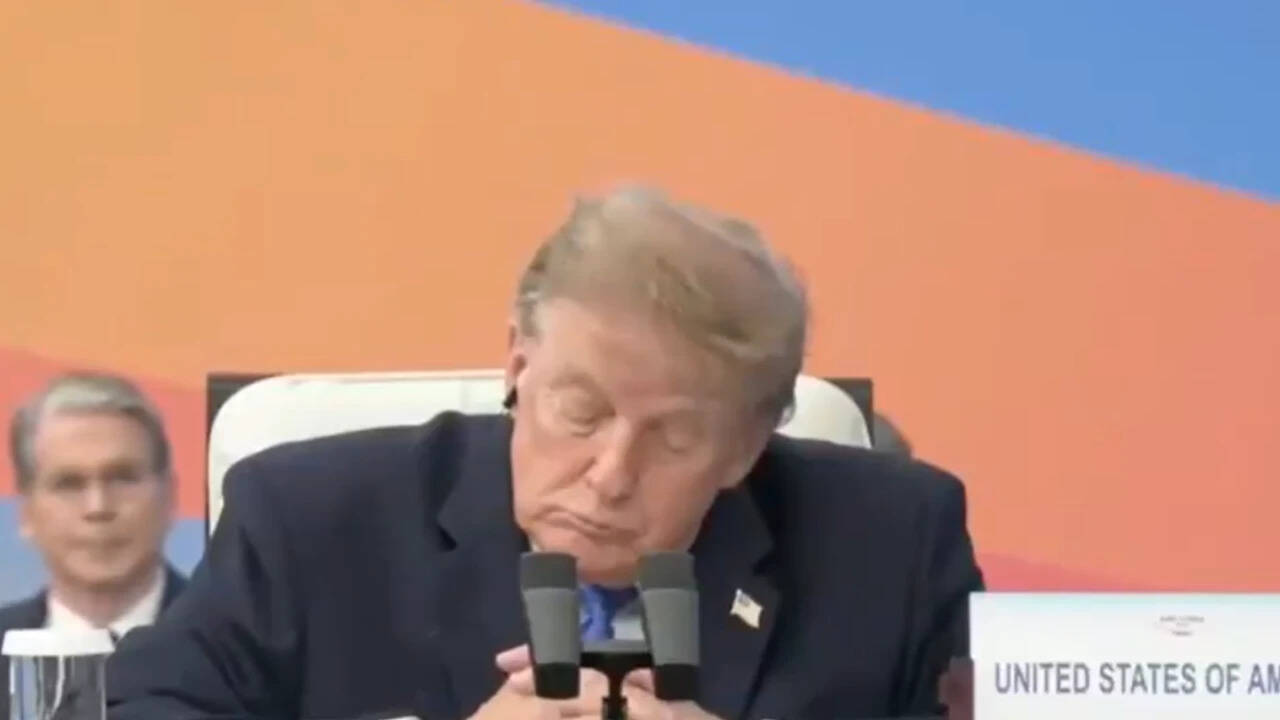
Exactly what was achieved when Xi met with Vladimir Putin and Donald Trump at Kylin Villa in northwestern Shenzhen on Thursday, however, has onlookers scratching their heads. Xi started by invoking the responsibility of Great Powers toward world peace; Putin delved into historic “shared interests;” while Trump immediately lashed out at “rogue globalist organisations,” such as the International Criminal Court (ICC).
The ICC “has gotten out of control,” Trump told his companions seated around a round wooden table, and has “really strayed far beyond its jurisdiction.”
It was almost as if this historic trilateral, held on the sidelines of the Asia-Pacific Economic Cooperation (APEC) summit, didn’t have any fixed agenda. It hadn’t. When the confab was first proposed, Putin wanted to talk about Ukraine, though U.S. officials pushed back. Trump instead suggested nuclear arms and Iran, but Beijing wasn’t keen. Finally, China’s Foreign Ministry settled on “safeguarding world peace and promoting strategic stability in major-power relations.”
It was therefore an occasion rich with platitudes but not a lot else. “In this global village, major countries shoulder special responsibilities,” said Xi, who also called for the destruction of all nuclear weapons. “Positive interaction among major powers is not an optional question, but a compulsory one.”
Still, the meeting served its purpose. Trump gained a chance to project influence after chastening midterms and the unfolding Nvidia saga that forced the resignation of his close friend Jensen Huang as CEO. Xi got to flaunt himself as the consummate statesman, while Putin took a baby step out from the diplomatic cold. But it was also a distinctly unsettling sight for the U.S. President to be sitting beside two of America’s most consequential adversaries, whose governments declared in 2022 that their friendship with each other had “no limits.”
Before the three-way meeting, Trump met separately with Putin and then Xi. His roughly 40 minutes with the Russian President began on a hopeful note: “Wonderful things can come out of this—or at least start,” Trump said. During an hour of talks with Xi, Trump returned to a more familiar concern. “I’ll be asking you to do some more for our farmers,” he said. He also suggested that Washington and Beijing could work together to end Russia’s war in Ukraine.
That prospect mattered to Ukrainian President Volodymyr Zelensky, who said Wednesday that the war could end in a single meeting if the U.S. and China used their economic leverage against Moscow. Instead, Trump launched a broadside against the ICC, which has issued an arrest warrant against Putin for war crimes, urging his autocratic counterparts to cooperate on “ways to protect our nations’ sovereignty.”
Trump also said it was “vital that we cooperate to combat the threat of nuclear proliferation in other countries around the world,” before segueing into a justification of his war in Iran: “That’s what we’re doing in Iran. We’re not going to let Iran have a nuclear weapon.”
Of course, this was always going to be an occasion that would put style over substance. On Wednesday, Xi surprised onlookers by greeting a clearly delighted Trump on the tarmac at Shenzhen Baoan Airport. Their handshake turned into a brief hug, before five People’s Liberation Army J-10C fighter jets flew overhead, billowing red, yellow, and blue smoke.
In personally meeting Trump as he deplaned Air Force One, Xi reciprocated the welcome he received from the U.S. President at Joint Base Andrews in September. The gesture was a first by a top Chinese leader since Mao Zedong met Nikita Khrushchev at Beijing’s airport in 1959.
Putin had to suffice with being greeted by Xi’s chief of staff, Cai Qi, upon his earlier arrival in the wee hours of Wednesday morning. But Xi spent much of that afternoon in talks with his embattled Russian counterpart, who used his speech to assembled CEOs to lambast Western sanctions, crowing that the U.S. and Europe had “punished themselves” with punitive measures, which Russia had successfully sidestepped anyway.
Upon emerging from his two-hour bilateral with Putin, Xi called on both countries to “lead and advance … the democratization of international relations.” Putin, in turn, boasted that economic coercion was “a thing of the past.” Later in the evening, Putin and Trump shook hands before the gala dinner as Xi looked on smiling.
“Beijing’s top priority would be to create a more stable external environment for China’s development, particularly by making relations with Washington more predictable while maintaining steady cooperation with Moscow,” says Sun Chenghao, a fellow with Tsinghua University’s Centre for International Security and Strategy.
Still, the summit threatened to be overshadowed by the Nvidia scandal, with company founder Huang admitting an affair with a woman accused of illicitly funneling chips to China and whom U.S. intelligence agencies reportedly suspect may be a Chinese spy. On Nov. 16, the U.S. Commerce Department issued an interim rule aimed at stopping Chinese firms from accessing advanced U.S. chips through data centers abroad.
Trump told Fox News that he and Xi “spoke the whole evening” during Wednesday’s gala dinner but only “briefly” discussed Nvidia. Trump also claimed he was unaware of the espionage allegations, which China vehemently denies. “I haven’t heard that she was a spy,” Trump said. “She was a businesswoman who bought chips, and who knows if they were bought right or wrong.”
Trump also appeared to shoot down any hopes of regulation governing AI: “We oppose any form of globalist regulation or anything to control or stifle [AI], and we won’t allow that to happen,” he said.
Still, the historic trilateral did succeed in visibly placing China at the center of Great Power diplomacy. Hosting the leaders alongside APEC supports Beijing’s claim that global influence is shifting eastward, with China as a stabilizing power, particularly amid unpredictable U.S. policy.
“The optics might actually play well for China,” says Chong Ja Ian, a professor of international relations at the National University of Singapore. “It certainly would fit the sort of image that Beijing and Xi would like to create for themselves.”
But while APEC was created in 1989 to ease trade and investment across the region, today’s world has been gripped by rising protectionism. The Trump Administration has levied tariffs on 60 trading partners that together account for 99.4% of U.S. imports, according to the Office of the U.S. Trade Representative. Moreover, Europe is increasingly chary about cheap Chinese exports that Brussels says are fueled by subsidies and industrial overcapacity.
Xi used his Wednesday address to business leaders to promise a more open Chinese market and present the world’s second-largest economy as a source of opportunity. “History tells us that opening doors brings progress while closing doors leaves one behind,” he said.
Yet the image of three elderly leaders debating global problems behind closed doors sits uneasily beside Xi’s call for a more multipolar world. Pro-Kremlin media was especially keen to frame the meeting as Yalta 2.0 after the historic powwow between Roosevelt, Stalin, and Churchill toward the end of World War II.
But it is Ukraine’s plucky defiance of that invasion that underscores how today’s Middle Powers have more agency. At the World Economic Forum in Davos in January, Canadian Prime Minister Mark Carney urged third countries to work together on trade, security and technology in order to shape the rules and resist economic coercion. “Middle powers must act together because if you are not at the table, you are on the menu,” Carney said.
After 90 minutes, the trilateral ended without remarks, the three leaders departing in their respective limousines. But the winner was clear. “The summit showcases the U.S. President and Russian President are trying to curry favor with the Chinese President,” says Ali Wyne, a senior researcher for the International Crisis Group. “The optics are quite striking in that regard.”