
Your rum and whisky are the same alcohol. The difference is what's left behind
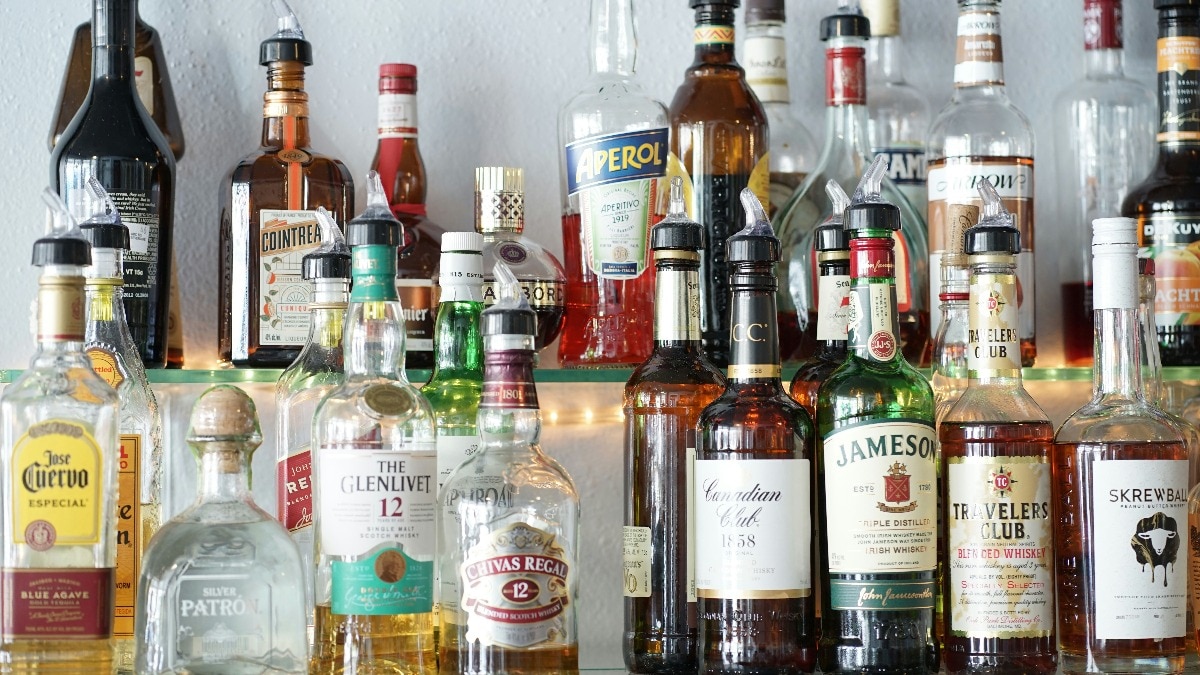
Pour a rum, a whisky and a vodka side by side, and you are looking at three drinks that differ in almost nothing that matters chemically.
The alcohol in each is the same molecule, present in roughly the same amount, doing exactly the same thing to the same enzymes in your liver. Everything you can taste, everything you would swear makes them different drinks, lives in a fraction of the liquid so small it barely registers on a lab report. Often less than one per cent of what is in the glass.
That fraction is the entire subject of this article, and it is why India's food regulator has told the Bombay High Court that Old Monk cannot be sold simply as "rum," arguing that the addition of artificial and nature-identical rum flavouring masks the drink's natural characteristics and alters its true identity, which the Food Safety and Standards Authority of India (FSSAI) says makes the label misleading.
FSSAI found that only 5 per cent of the drink was actually aged rum, the rest was plain spirit. So the manufacturer agreed to drop the "7 years old" claim and relabel the product as "Flavoured Rum."
So let us take a bottle apart properly, molecule by molecule.IS ALCOHOL IN RUM DIFFERENT FROM THAT IN WHISKY?
Ethanol is a small and rather plain molecule, two carbons, six hydrogens and one oxygen, written as C2H5OH. It has no mirror-image twin, no alternative arrangement of consequence. There is exactly one ethanol, and it is the same object whether it emerged from sugarcane, from barley, from grapes, or from a petrochemical reactor. The same base spirit becomes rum or whisky through flavouring alone. (Photo: Unsplash) Your liver, which processes ethanol using an enzyme called alcohol dehydrogenase, has no instrument for asking where it came from and would not care if it had one.
So when people say Indian rum is just flavoured ethanol, they are describing something real, but a comparison to Jamaican rum or single-malt Scotch doesn't hold. Jamaican rum, by law and tradition, is distilled directly from fermented cane molasses, often in traditional copper pot stills, using long fermentations that deliberately build up esters and other congeners rather than stripping them away, and it is not permitted to be reconstructed from neutral spirit and added flavouring.
Single-malt Scotch, by definition, must be distilled entirely from malted barley and matured in oak for at least three years, with no flavouring or colouring beyond permitted caramel colour. So the argument was never only about ethanol.
It is about the traces, and just as importantly, about whether the spirit was actually distilled from its named ingredient, cane for rum, malted grain for whisky, or whether it began life as a separately made neutral spirit, distilled from whatever agricultural material was cheapest, and was only flavoured afterwards to imitate the drink it claims to be.WHAT ARE CONGENERS, AND WHY DO THEY MATTER?
Fermentation is biology, and biology is gloriously untidy.
Yeast, usually Saccharomyces cerevisiae, eats sugar and, starved of oxygen, breaks it down through a pathway called glycolysis, releasing ethanol and carbon dioxide as waste. Every beer, wine, whisky and rum exists because a fungus finds our sugar delicious and politely excretes alcohol. Neutral spirit comes off the still at 96% alcohol by volume, gets diluted to 42.8%, then flavoured into either rum or whisky. (Photo: Unsplash)
But yeast is not a machine devoted solely to ethanol. Alongside it, in small quantities, it produces an entire orchestra of other compounds. We call them congeners, and they include fusel alcohols such as isoamyl and isobutyl alcohol, esters such as ethyl acetate, aldehydes including acetaldehyde, and traces of methanol and furfural. Ageing in wood contributes tannins, vanillin and more.
These congeners are, quite simply, the drink. They are why rum tastes of treacle and banana, why bourbon tastes of vanilla and caramel. Esters carry fruit. Fusel alcohols give warmth. Aldehydes lend sharpness.
Peated Scotch whisky, specifically single malt Scotch made with barley dried over peat smoke, is the drink known for that flavour. Not all Scotch is peated, though plenty of malts use unpeated barley and taste completely different, fruity, floral, or honeyed instead.
Peat, in particular, isn't a congener in the way esters or fusel alcohols are. It has nothing to do with yeast or fermentation. It comes from malting, the stage before fermentation even begins, when germinated barley is dried over a peat fire.
That smoke deposits phenolic compounds, chiefly guaiacol and other cresols, directly onto the grain, and those compounds survive fermentation and distillation to give Scotch its smoky, medicinal character.
So, while esters, fusel alcohols and aldehydes genuinely are congeners produced by yeast during fermentation, peat smoke is a flavour imprinted on the raw material before the yeast is ever introduced, which is why an unpeated Scotch and a heavily peated one can come from identical fermentation conditions and still taste worlds apart.
Strip them all away, and you get vodka, which is essentially the deliberate and skilful pursuit of nothing at all.WHAT IS EXTRA NEUTRAL ALCOHOL, AND HOW PURE IS IT?
Here is where the Indian story begins, and it is not the story most people assume.
The base of almost all mass-market Indian whisky and rum is extra neutral alcohol, or ENA. Under FSSAI's own regulations, ENA is alcohol produced by distilling and rectifying fermented agricultural material, which can include grains, fruit, vegetables or molasses, to a minimum strength of 96 per cent alcohol by volume. It is made using yeast, from a plant, exactly as any fermented spirit is made. It is not petrochemical, whatever the internet has been telling you.
The difference lies in what happens next. ENA is rectified, meaning it is distilled over and over through multi-column stills until it reaches an alcohol purity of about 96 per cent alcohol by volume, and its congeners have been systematically removed along the way. That is the express purpose of the process. Rectification is congener removal, taken almost to its limit. Two carbons, six hydrogens and one oxygen, with no alternative arrangement of consequence, which is why pure ethanol is chemically indistinguishable regardless of source. (Photo: Unsplash)
What emerges at that 96 per cent mark is beautifully pure and completely mute. It tastes of almost nothing, because everything that could have tasted of something has been engineered out.
The spirit is then diluted with demineralised water down to a drinking strength of around 42.8 per cent alcohol by volume, and colour and flavour are added to give it back an identity. Sometimes a little genuine cane spirit or malt is blended in.
And this is precisely FSSAI's objection, expressed through its counsel in one rather pointed submission: that a product built this way, and calling its flavour "rum," is misleading, because the characteristic flavour of rum ought to come from its natural ingredients, fermentation and maturation, not from a flavouring compound added afterward to a spirit that has already had that character removed.HOW IS INDUSTRIAL ETHANOL MADE, AND IS IT IN YOUR DRINK?
For completeness, because this is the claim circulating most widely, there is a genuinely industrial route to ethanol, and it has nothing to do with yeast.
It starts with ethylene (C2H4), a two-carbon gas from petroleum or natural gas. Ethylene and steam are passed over a catalyst, typically phosphoric acid on a porous mineral such as kieselguhr, at roughly 280 degrees Celsius and around 70 atmospheres of pressure. Water adds itself across the double bond and ethanol falls out. Chemists call it the direct hydration of ethylene, and Shell Global, a large international energy and petrochemical company, has been doing it at scale since 1947. Extra neutral alcohol at 96% ABV is diluted with demineralised water to 42.8% ABV, then flavoured and coloured. (Photo: Unsplash)
Its trace compounds are entirely different from fermentation's. Instead of fusel oils and esters, you get diethyl ether, acetaldehyde, and crotonaldehyde, which forms when acetaldehyde molecules join and shed water. Heavier hydrocarbons appear when ethylene polymerises, and can become alcohols and then ketones.
This liquid is banned from your glass, in India as much as anywhere else. In Europe, Regulation 2019/787 on spirit drinks states explicitly that alcoholic beverages shall not contain alcohol of synthetic origin, or any alcohol of non-agricultural origin, and even the alcohol used to dissolve a colouring must come from agriculture. India's own regulations work on the same principle, defining ENA strictly as a product of fermenting agricultural material, which by definition excludes petrochemical ethanol from any legal Indian spirit.
Industrial-grade ethanol, in other words, is barred outright from alcoholic beverages, whatever its purity, because the law defines a spirit by where its alcohol was grown, not merely by how clean it turns out.
Since April 2026, Indian petrol is mandated to contain up to 20 per cent ethanol, a blend India reached five years ahead of schedule. But here is the twist that undercuts the original viral claim even further: this ethanol is not petrochemical either. India's ethanol blending programme, run by the Ministry of Petroleum and Natural Gas, sources its ethanol overwhelmingly from fermenting sugarcane, molasses and grain, the same agricultural route used to make ENA for spirits, not from petroleum.
So even the ethanol in your petrol tank is, more often than not, fermented, not synthetic, which makes the original comparison accidentally more true on the fermentation side, and still wrong on the industrial and synthetic framing that gave the claim its alarm.CAN A LABORATORY TELL WHERE THE ALCOHOL CAME FROM?
It can, and this is my favourite fact about the whole subject.
Living plants absorb carbon from the air, and a tiny, steady fraction of atmospheric carbon is carbon-14, a radioactive form created high in the atmosphere. A growing sugarcane takes it up. When yeast converts that sugar into ethanol, the carbon-14 comes along for the ride.
Petroleum has been underground for tens of millions of years, and carbon-14 decays with a half-life of about 5,730 years. In crude oil there is essentially none left. Vodka is built to carry almost no congeners, while whisky, rum and cask-aged brandy can carry hundreds of times more. (Photo: Unsplash)
So fermented alcohol is faintly radioactive and industrial alcohol is not. Measure the carbon-14 and the spirit confesses its ancestry, with no ambiguity whatsoever. The European Union considered this important enough to formally revive the method, and the Commission Implementing Regulation 2023/383 reinstates a reference method for determining carbon-14 in ethanol precisely to separate synthetic alcohol from the agricultural kind.
A drink cannot lie about where it came from. The atoms keep the record.DO CONGENERS AFFECT YOUR HANGOVER?
They do, a little, and rather less than folklore insists.
Researchers at Brown University compared bourbon, which carries roughly 37 times the congeners found in vodka, against vodka itself. Drinkers of bourbon reported distinctly worse hangovers. Yet their next-day performance on tasks relevant to safety, reaction time and balance among them, was no worse at all. A review of this literature concluded that congeners make a measurable contribution to how wretched you feel, while ethanol itself has a considerably stronger effect than any of them.
Later work sharpened the point further. Hangover severity tracks blood ethanol concentration closely and correlates with markers of inflammation, while blood acetaldehyde shows no consistent relationship with how awful you feel.
So a cleaner spirit may treat you marginally more kindly. It is a real effect, it is small, and it is comprehensively outweighed by how much you drank.ARE SOME OF THESE TRACE COMPOUNDS DANGEROUS?
Some are, and I would rather be plain than reassuring.
Methanol is the genuine villain in India's recurring hooch tragedies, but there it is not a trace by-product of decent fermentation. It is a deliberate and catastrophic adulterant, and it blinds and kills. Crotonaldehyde, from the industrial route, is reactive and toxic, which is why pharmacopoeia sets strict limits on it. Bourbon carries 37 times vodka’s congeners, yet no worse impairment. (Photo: Unsplash)
But rectification, that same climb to 96 per cent purity, removes nearly all of this from either route, which is why the purity argument between them is largely academic in a properly made spirit.
The harder truth is that ethanol is the hazard. The World Health Organization's cancer agency classifies both alcoholic beverages and the acetaldehyde associated with drinking as Group 1 carcinogens, its highest category, alongside tobacco. Your body turns ethanol into acetaldehyde and acetaldehyde damages DNA, and that happens identically regardless of provenance. It matters especially here, because a large share of people in Asia carry a variant of aldehyde dehydrogenase that clears acetaldehyde slowly. The flush many of us know is not a quirk. It means the carcinogen lingers.SO WHAT IS ACTUALLY IN YOUR BOTTLE?
Ethanol, water, and an argument about a fraction of a per cent.
That fraction is not a technicality. It is the difference between a spirit that carries the memory of the cane it grew from and one that has been stripped to silence at 96 per cent purity and then handed a script. Both will get you drunk in precisely the same way, and neither is meaningfully safer than the other.
Your rum is not petrol. It is sugarcane, purified of everything that makes it taste of sugarcane, and then reminded of itself from a flavour bottle.
The molecule was never the problem. What we removed from around it was.- EndsPublished By: Radifah KabirPublished On: Sep 15, 2026 14:02 IST


