Zema promises to make minimum wage track inflation, but won’t guarantee real increase - Valor International
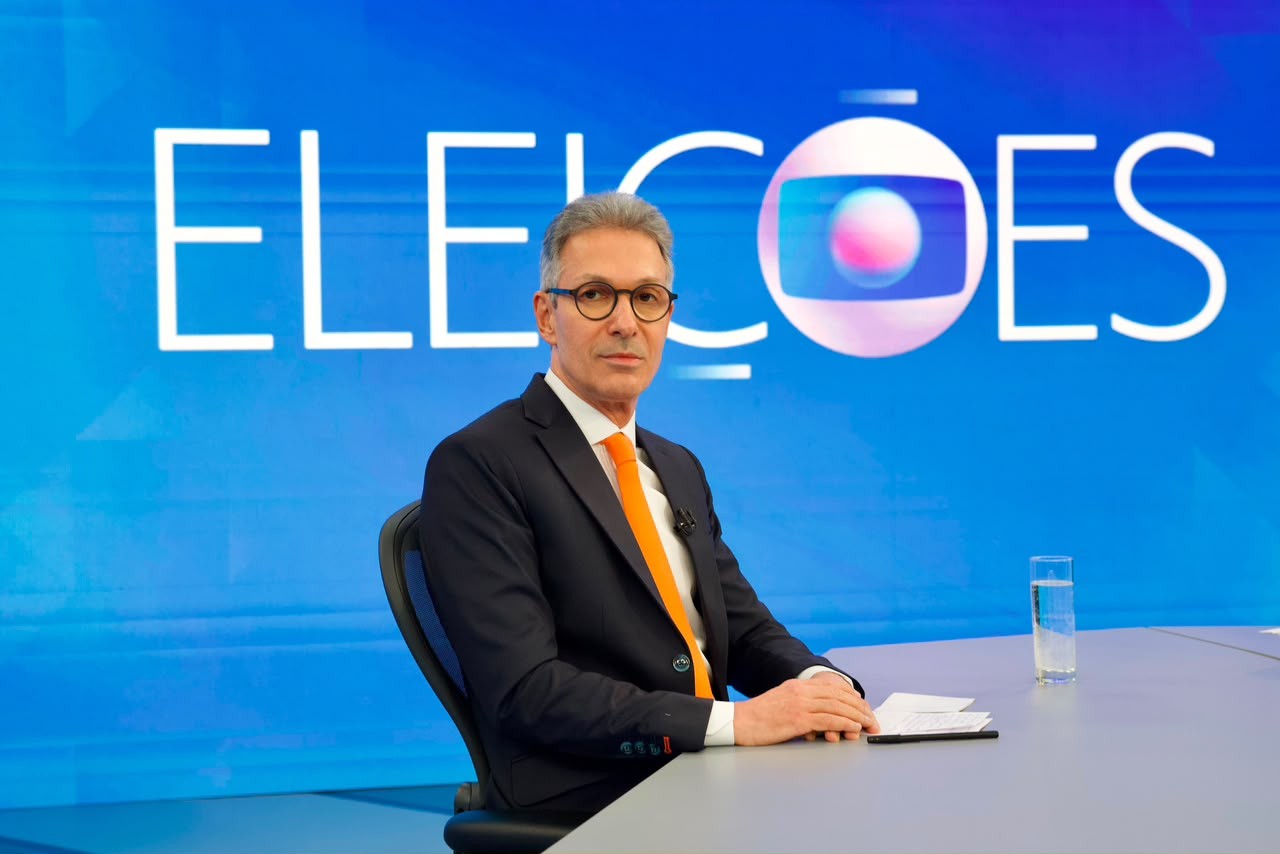
Novo Party presidential candidate Romeu Zema said Monday (24) that, if elected, he will maintain adjustments to the minimum wage based on inflation but did not guarantee a real increase in the benefit, as is currently the case. During an interview on TV Globo’s Jornal Nacional, Zema proposed fiscal adjustment measures to reduce the benchmark Selic interest rate to 6% a year but did not explain how he intends to achieve the reduction or what the adjustment would entail.
In a gesture toward Bolsonaro supporters, Zema also backed amnesty for those convicted by the Supreme Court (STF) over coup-related acts, criticized the court, and supported implementing printed ballots.
During the interview, Zema was asked whether he would maintain the policy of raising the minimum wage with real increases. The candidate did not commit to the measure and attached conditions to it. “If the economy is doing well, if the accounts are balanced, yes,” he said.
“I guarantee that no one will have a loss. If there is inflation, we will fully compensate for the inflation. It is absurd for a retiree not to receive inflation compensation,” he added. Currently, the minimum wage is adjusted for inflation based on the INPC consumer price index, under a rule that allows a real increase of up to 2.5% a year.
The candidate said his priority, if elected, would be to lower interest rates, but did not explain how he would do so. The interest rate is set by the Central Bank’s Monetary Policy Committee (Copom), an independent institution, rather than by the president.
The Selic is currently 14% a year. “With a serious government, with credibility, fighting corruption and fraud, this rate will fall to 6%. That alone will give us an economy of R$800 billion a year,” he said. For Zema, lower interest rates are linked to government credibility. “A government with good management can make progress in reducing spending,” he said.
Asked about Social Security, Zema said that, “for now,” he would not change the minimum retirement age. The focus, he said, would be on increasing the formalization rate in the labor market to boost revenue. “We will change [the minimum age] as life expectancy increases. And then see if we can’t collect more through greater formalization.” The candidate said the calculation would depend on the success of the fiscal adjustment he intends to undertake. “Brazilians already work a lot. I don’t want Brazilians working more. I want incomes to increase.”
With 3% of voting intentions, according to a Datafolha poll released Friday (21), Zema said that, if elected, he would grant amnesty to those involved in the coup-related acts of January 2023. He also said he did not agree that there had been an attempted coup in the country. “I disagree because there is no attempt at a coup in human history that has been a movement of vandalism, of destruction like what happened in January 2023.”
Zema then defended amnesty for those involved. “I will grant amnesty, or at the very least a court that is not political, a court that is judicial. What we saw in Brazil was persecution,” he said, without explaining what he intends to do regarding the STF, while criticizing the institution. The next president will be able to appoint four of the court’s 11 justices.
Following the coup-related acts, former president Jair Bolsonaro (Liberal Party, PL) was sentenced by the Supreme Court to 27 years and three months in prison for leading an attempted coup in the country.
In addition to Bolsonaro, about 1,400 people were convicted for participating in the coup-related acts of January 2023. The courts identified seven crimes in connection with the acts: attempting to abolish the democratic rule of law, coup d’état, aggravated damage, criminal association, incitement to crime, armed criminal organization and deterioration of protected cultural heritage.
Zema, however, reiterated his disagreement with the punishments. “In my opinion, the person who commits the crime is the one who carries the crime forward. Whoever did it, thought about it, conceived it, in my view did not commit a crime,” he said, then claiming that there had been “only the deterioration” of public property on Jan. 8. “It was a clearly political trial,” he said.
In another gesture toward Bolsonaro supporters, the former governor said he was “totally democratic” and trusted electronic voting machines but added qualifications. “I trust electronic voting machines, which should be improved if there were printed ballots, but I trust them.”
The former governor made another gesture toward Bolsonaro supporters by opposing mandatory vaccination. “I cannot allow a family, a child, to be persecuted because someone did not get vaccinated.”
During the interview, Zema played down corruption cases in his administration but said those involved should “rot in prison.” Asked about a scheme that diverted more than R$4 billion from the government, he responded: “Let me express my condemnation of these criminals.”
Asked about public security, Zema reiterated his praise for the security policy of Nayib Bukele, the president of El Salvador. Right-wing candidates often praise the country’s reported decline in crime indicators, but researchers warn of flaws in the model, which is based on disregard for legal rules and fundamental rights, including the suspension of defense rights, arrests without warrants, and longer prison terms without a court order.
Asked about the increase in femicide in Minas Gerais during his administration and what he intends to do to combat the crime if elected president, Zema misspoke: “I have a series of programs against women, including ones I moved forward.” The statement, made shortly after the interview ended, drew strong reactions on social media.
The candidate deflected when asked about the increase in such cases in Minas Gerais under his administration. “I can assure you that we reduced them. There can always be a rebound.” Among measures to combat femicide nationwide, Zema said he would expand the number of specialized police stations serving women who are victims of violence and would also promote awareness initiatives in schools.
Also on public security, Zema played down the decline in investment from R$533 million to R$200 million in information and intelligence initiatives in Minas Gerais, identified by the Public Security Yearbook, a report prepared by the Brazilian Public Security Forum. The candidate said funds may have been shifted to another purpose, but said total security investment increased during his administration.
The candidate promised universal full-time education nationwide but acknowledged that he did not know how many schools in the country offer this type of education. “I will advance as much as possible. In Minas, we increased the number from 70 to more than 800,” he said. “I commit to increasing by ten times [the number of full-time schools in Brazil]. In other words, we will universalize it.”
This article was translated from Valor Econômico using an artificial intelligence tool under the supervision of the Valor International editorial team to ensure accuracy, clarity, and adherence to our editorial standards. Read our Editorial Principles.