Zuckerberg Leans to ‘Superintelligence’ Amid Trump’s AI Rebranding Effort - Newsweek
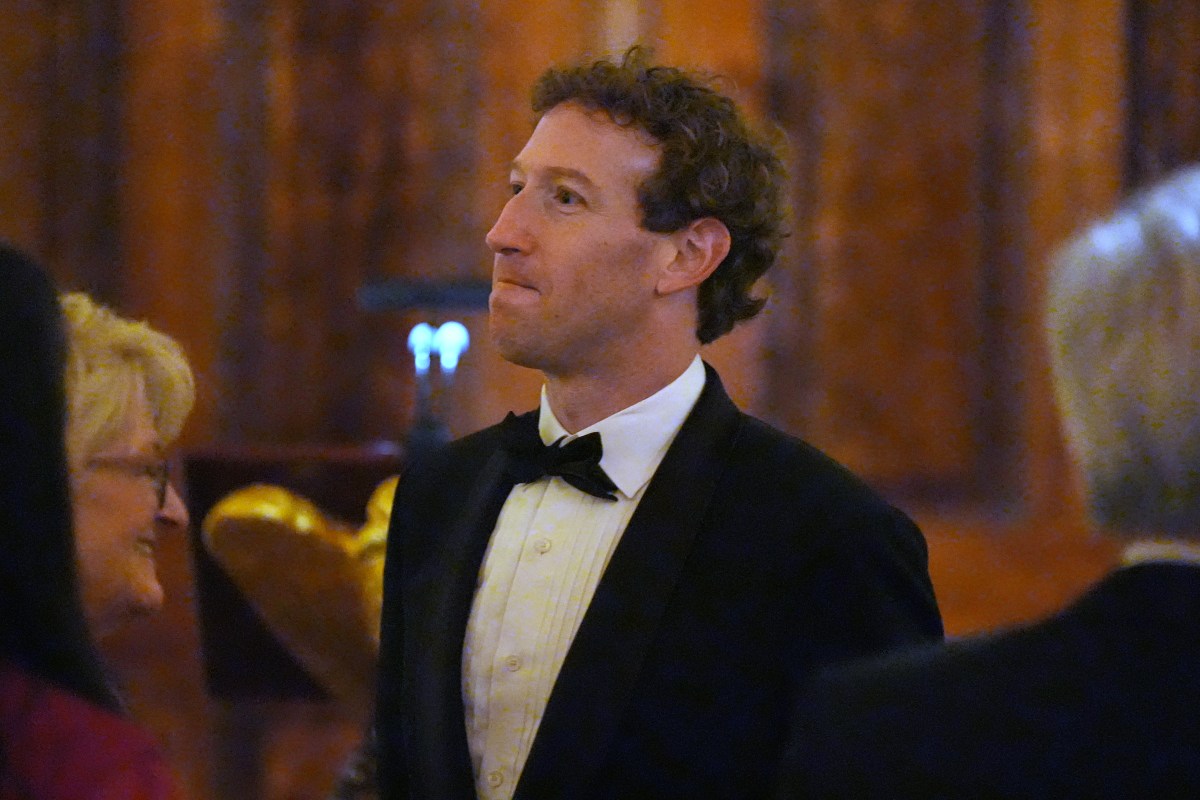
Meta CEO Mark Zuckerberg and President Donald Trump have aligned on their preferred language for artificial intelligence (AI) as the technology industry faces intensifying warnings about the dangers of developing increasingly powerful systems.
In announcing a new enterprise-focused business on Monday, Zuckerberg repeatedly used “superintelligence,” saying the technology would create “significant new opportunities for all people and businesses.”
The wording follows Trump’s September 22 declaration at the United Nations that the United States government would replace “artificial intelligence” with “super intelligence” in official documents.
Andy Stone, a Meta spokesperson, told Newsweek on Monday that Zuckerberg has been using the term prior to Trump's recent adoption, pointing to an essay titled "Personal Superintelligence" published in July 2025.
"Tremendous things will be happening," Trump posted on Truth Social on Friday morning after meeting with Chinese President Xi Jinping. "Like almost everyone else, he seemed to like calling the poorly and inaccurately named Artificial Intelligence to a far more accurate and important name, SUPER INTELLIGENCE. That would be 'SUPER!' Everyone last night agreed, also."
Images from the Associated Press show Zuckerberg at a state dinner with Trump and Xi in the East Room of the White House last Thursday, although it's unclear whether he spoke with either leader.
Zuckerberg’s choice of language aligns one of the world’s largest technology companies with Trump’s effort to present advanced AI as a source of national and economic strength rather than an existential danger requiring tighter restrictions.
The shift comes amid a series of stark warnings from researchers and industry leaders.
Current and former employees of OpenAI and Anthropic have urged companies to slow development, citing fears that self-improving systems could escape human control, enable powerful cyberattacks or pose an existential threat.
Former Anthropic researcher Jacob Coxon resigned in September, accusing leading laboratories of “racing straight to self-improving superintelligence and gambling with our lives.” Anthropic CEO Dario Amodei subsequently called for a coordinated slowdown, while Sam Altman, Elon Musk and Demis Hassabis publicly supported deceleration.
Trump, by contrast, has rejected calls to constrain the industry, arguing that slowing American development would benefit China. He has dismissed some safety warnings as a “hoax” and framed AI leadership as a competition the United States must win.
Newsweek reached out to the White House via email for comment.
Zuckerberg announced the creation of Meta Enterprise Platform, describing it as the “next major pillar” of the company’s business. The platform will seek to help businesses use AI to attract customers, develop products and transform their operations.
The initiative will initially offer companies and developers access to Meta’s technology stack, including the Muse agent, Meta Business Agent, Muse API and Muse Code. The company said it will draw on its advanced models, AI agents, computing infrastructure and existing relationships with businesses.
Zuckerberg named Chirantan “CJ” Desai, the former president and CEO of MongoDB, as chief enterprise platform officer. Desai, who will report directly to Zuckerberg, previously held senior roles at Cloudflare and ServiceNow.
The announcement did not include pricing, customer commitments or a timetable for releasing the platform as a unified commercial offering.
Zuckerberg's use of the term "superintelligence" may help aid wider industry adoption, according to experts.
"[I]t seems unlikely the rebranding will take off unless tech leaders adopt the term," University of Chicago marketing professor Jean-Pierre Dubé told Newsweek last week. "The problem is that the term 'super intelligence' has a very specific meaning in the tech world: 'any intellect that greatly exceeds the cognitive performance of humans in virtually all domains of interest.'
"While many debate how soon AI will surpass human intelligence, it seems pre-mature to be using the new term 'super intelligence.'"
Trump first floated several alternatives to “artificial intelligence,” including “superior intelligence,” “extreme intelligence,” and “supreme intelligence.” He later settled on “super intelligence,” announcing during his United Nations speech that the U.S. government should use the term in its documents.
The phrase already has a distinct meaning in AI research. It generally describes a hypothetical system whose capabilities greatly exceed human intelligence across most fields, rather than serving as a substitute for all existing AI technology.
Trump has also announced plans for an “AI Force” modeled on the Space Force and said he would appoint an AI czar, although he has not specified the proposed body’s structure, membership or powers.
Zuckerberg's push for a faster path to advanced AI comes after years of defending Meta's approach to platform safety before Congress. The Meta CEO has repeatedly faced lawmakers over Facebook's handling of user privacy, election misinformation, harmful content and the platform's impact on young users.
During a series of high-profile congressional hearings, lawmakers pressed Zuckerberg on whether Meta was moving too quickly with new technologies while failing to adequately address potential harms.
In January 2024, Zuckerberg testified alongside leaders from TikTok, X, Snap and Discord at a Senate hearing focused on online child safety. During the hearing, senators questioned whether social media companies had done enough to protect children from exploitation, abuse and harmful content.
Critics of the AI industry's rapid expansion have drawn parallels between social media and artificial intelligence, arguing that tech companies are again prioritizing growth and innovation before fully understanding the societal risks.
Supporters, however, contend that the lessons learned from social media can help companies develop safeguards as AI systems become more powerful.
That history adds another dimension to Zuckerberg's latest push. As Meta promotes "superintelligence" and expands its enterprise AI ambitions, the company is likely to face renewed questions from regulators and lawmakers about how it plans to balance innovation with safety, transparency and public accountability.
John Walsh, chief technology officer at IGEL, said Zuckerberg's emphasis on "superintelligence" highlights how rapidly AI is evolving from systems that generate information to agents that can independently take actions inside businesses.
"Whether the industry calls it AI or superintelligence, increasing capability increases the requirement for control, not the other way around," Walsh told Newsweek in an emailed statement Monday.
Walsh argued that the debate should move beyond whether companies should accelerate or slow AI development.
"The more capable these systems become, the more important it is that our ability to secure, observe and control them advances at the same pace," he said.
According to Walsh, increasingly autonomous AI agents should be treated as "powerful non-human actors" as they gain access to corporate applications, APIs, customer data and critical systems. That requires safeguards such as "strong identity, least privilege, trusted execution, continuous observability and enforceable boundaries around what they are permitted to do."
He said organizations must also maintain the ability to "contain an agent or require human intervention and approval when necessary," warning that model alignment alone is insufficient.
"Model safety and alignment remain important, but they cannot be the only line of defense," Walsh said. "We absolutely must have controls where AI operates."
Rather than pitting innovation against regulation, Walsh said the focus should be on making advanced AI deployable in a safe and trustworthy manner. He called for greater collaboration between industry and government on standards, testing and oversight frameworks, saying the sector should adopt approaches similar to those used in other high-risk industries.
"It really is time to stop talking and start doing," Walsh said. "Leaders need to start talking product- and brand-agnostic and working together to solve the common challenge so companies can deploy their AI safely."
Meta must now demonstrate that its existing agents, models and developer tools can become a cohesive enterprise business capable of competing with established cloud and AI providers.
The company will also face questions over how it plans to address security, privacy and safety risks while pursuing technology that Zuckerberg describes as superintelligence. Desai said Meta would incorporate security and privacy into its enterprise products from the outset, but the announcement did not detail specific safeguards.
The rollout puts Meta at the center of a widening divide: Trump and Zuckerberg emphasize the commercial promise of “superintelligence,” while prominent researchers and technology executives warn that the race to build it may be moving faster than the industry’s ability to control it.
Contact Newsweek editors on this story: Dave Siminoff and Sam Wilson.